








01 Background
Four Markets, One Lean Team
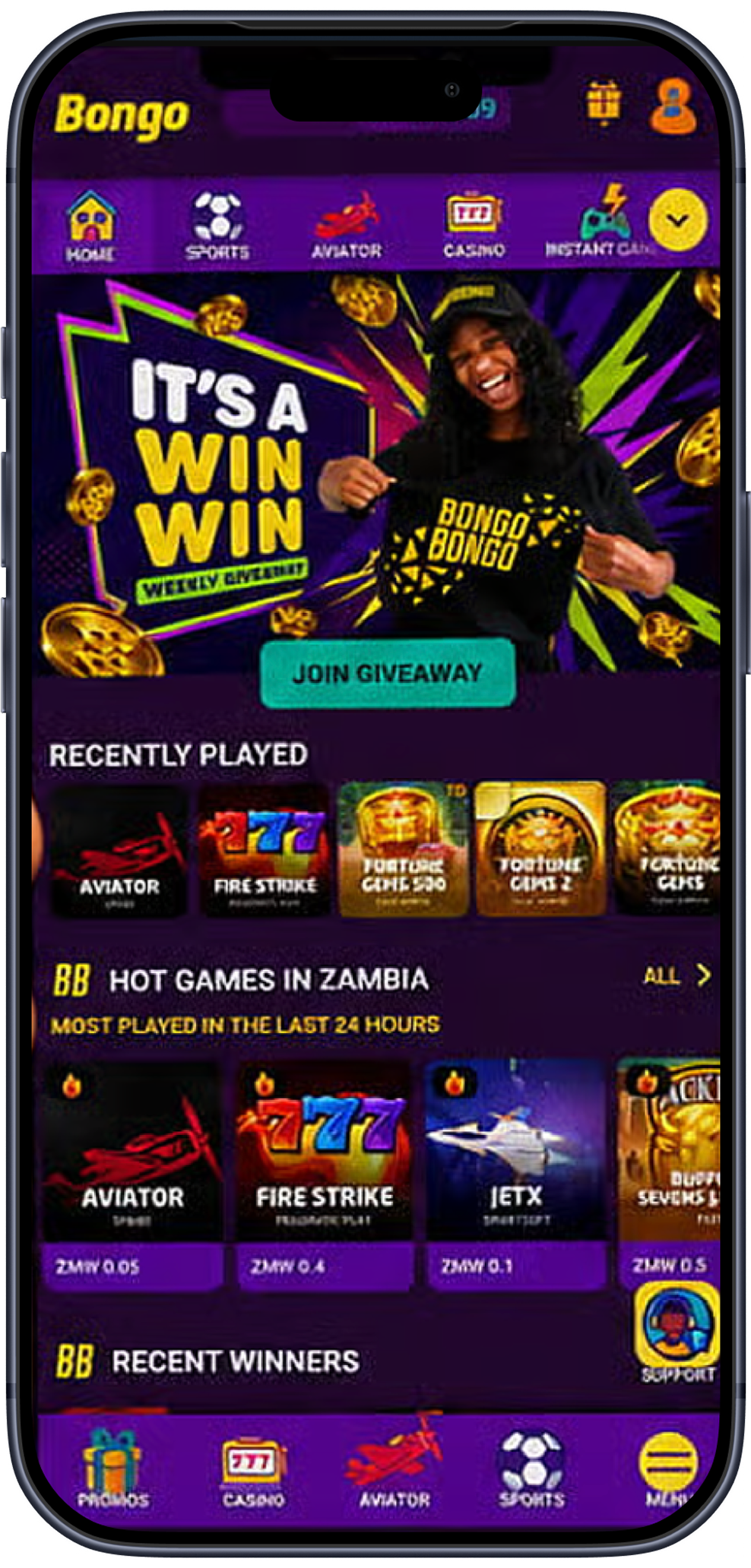
Bonmoja is a B2B iGaming provider that provides locally licensed African operators with a market-ready sportsbook and casino on the Bonmoja platform, along with the right to license its consumer-facing brand, BongoBongo. First launched in 2018, BongoBongo is live in Uganda, Kenya, Zambia, and Tanzania, adapting to local currencies, payments, and mobile-first betting.


The brand spans online casino, crash and instant games, live casino, virtual sports, and sportsbook. Casino is still the core of the proposition. Sports betting is how BongoBongo widens the session: the same player, the same wallet, the same app — not a second product bolted on the side.

By 2025, the question was no longer “Can we offer more fixtures?” It was whether a lean team could run a modern sportsbook solution across four markets without taking on a trading desk, and whether that sportsbook would feel like BongoBongo on the phones their players actually use.
02 The Challenge
More Control, Less to Manage
Risk and gameplay checks were handled by the internal team. Timing gaps between live events and available prices created arbitrage risk. Limited cashout controls eventually forced the team to switch the feature off. Variable cashout and 2-Up were the next product bets — and implementing them safely on the old stack would have meant more in-house engineering and more in-house risk work.

Bonmoja wanted a managed sportsbook solution for Africa, with risk controls built into the platform, modern features they could switch on with confidence, and an integration that did not grow the team.

They also needed something an iFrame cannot give you in East and Southern Africa: a first paint that works on a 2G/3G Android, a sportsbook that lives inside the same app as the casino, and enough control to localize by market — Swahili-first in Tanzania, country SEO, local tax and promo rules — without waiting on a vendor UI release.
What Bonmoja Needed From Its Next Sportsbook Setup
[ 1 ]
Built-in risk management at the player and match level.
[ 2 ]
Modern sportsbook features like cashout, 2-Up, and focused depth, along with the controls needed to run them safely.
[ 3 ]
A managed core that a lean team could integrate and then adapt for African conditions.
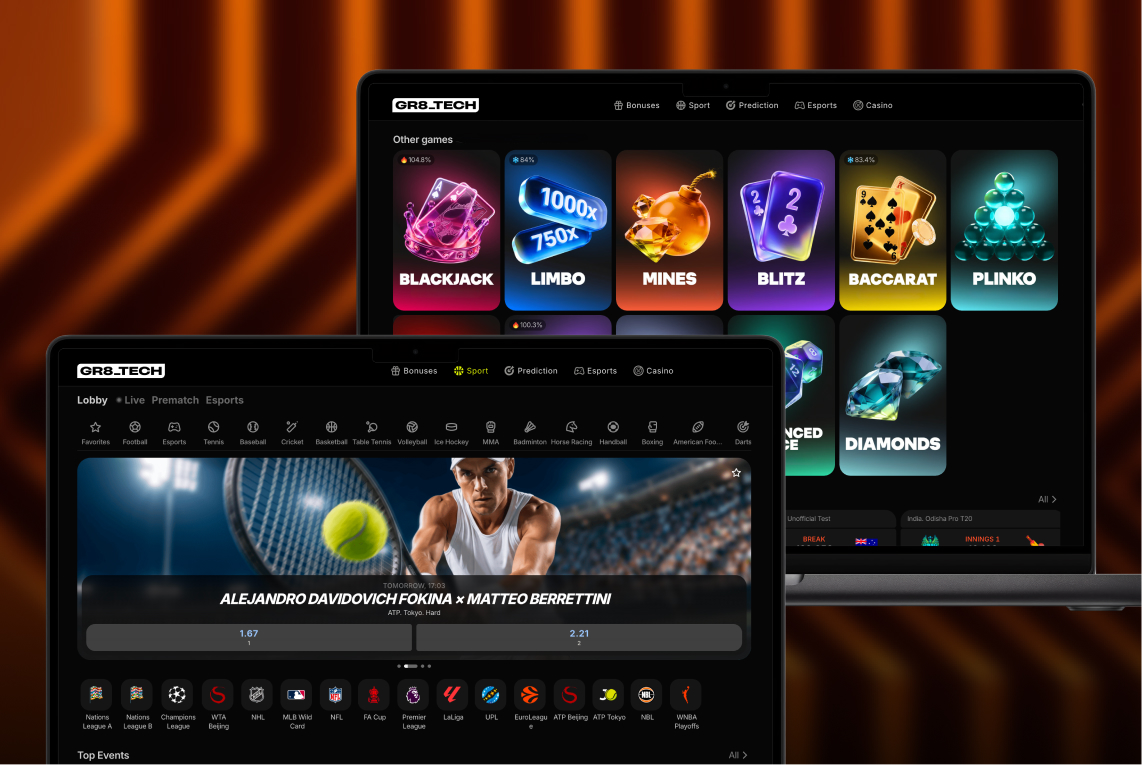
GR8_TECH offered the right coverage, market-level configurability, and built-in risk management for this approach. Bonmoja could focus on depth where it mattered most, instead of trying to cover everything. The platform would handle trading, settlement, and risk, while Bonmoja would control the player-facing product.
03 Approach
Managed Core, API-Controlled Front End
Football stayed at the center. The team focused on the markets that move money — bet placement and cashout — rather than spreading effort across long-tail sports. GREAT_SPORTSBOOK made that selectivity possible: coverage could be shaped market by market, with player- and match-level risk controls underneath.


The sportsbook integration took place in two phases:
OCTOBER 2025
Phase one — Sportsbook iFrame
Bonmoja launched GREAT_SPORTSBOOK as a fully managed iFrame. Fastest path to a production sportsbook, GR8_TECH’s risk engine included, Tanzania first, then the other markets. For a lean team, that was the right first move.
DECEMBER 2025 - MARCH 2026
Phase two — Sportsbook API
Once the managed platform was live, the constraint flipped. The iFrame was a second application inside BongoBongo: its own navigation, its own first load, no server-rendered odds, limited room to tune for low-end devices or to make sports and casino feel like one product. So Bonmoja kept GR8_TECH as the engine and rebuilt the front end on the public APIs — Line API for the opening picture, DirectFeed for live corrections, PAM for identity, the betting and cashout APIs for money movement.
“The core integration was straightforward given the managed platform — the main body of work was that front-end rebuild and tuning it for local conditions, rather than the sportsbook plumbing itself.”

04 implementation
Building the Sportsbook Around African Players
We still price the markets, accept the bets, run cashout and 2-Up, and hold the risk controls. What changed is everything the player sees and everything the phone has to download.
- One product
- Server-rendered
- light payload
- Low-end phones
- Local

One product, not a sportsbook in a box
The betslip sits in the BongoBongo shell. Homepage widgets can send a pick to the same slip. Wallet, login, bottom navigation, and casino stay continuous. That is the difference between embedding a vendor site and owning the session.

Server-rendered for African networks
Sportsbook pages are rendered on the server, so the first response is HTML with real fixtures and odds — not a blank iFrame waiting on a second app. Prematch pages can be cached at the edge for a couple of minutes; live and event pages refresh in seconds. On an unstable connection, the player sees a book, then live prices correct in place.

A light payload, on purpose
Unfiltered sportsbook feeds are too heavy for the devices in this market. Bonmoja’s server caches Line data and ships a slimmed event list to the phone — on the order of 3 KB for ten events, versus well over 100 KB of raw payload. Live updates use a compact binary format and incremental diffs rather than full list redraws. The sportsbook JavaScript loads only when a player opens the sports section, so casino and lobby traffic does not pay for it.

Built for the phones the market actually uses
The design target is low-end Android, low RAM, weak CPU, 2G/3G. Live update flushing is throttled on those devices. Page memory is capped more aggressively. Speculative prefetch is off. On true feature phones — KaiOS, Opera Mini, J2ME — an edge worker routes traffic to BongoBongo’s lite host before the full app ever loads. The sportsbook is not a desktop iFrame squeezed into a cheap handset. It is a product that assumes a cheap handset.

Local where it counts
Tanzania is Swahili-first, with English as an opt-in locale. Market names, SEO, and sportsbook language follow the country. Kenya can present local tax rules on bet history. Promos, free bets, lucky bets, and 2-Up are BongoBongo product decisions on top of GR8_TECH eligibility — not a one-size-fits-all UI for every brand on the platform.
05 Results
Results: Less Risk, More Consistent Performance
The clearest operational change was risk. Manual player- and match-level checking moved onto the platform. The timing and arbitrage exposure of the old data-feed model dropped. Player limits remain an area the team still works with directly. The Bonmoja team no longer has to police the book by hand.
Five Months After Migration:
Positive sportsbook revenue every month since go-live
The strongest commercial result is consistency. Revenue has been positive every month since the migration, compared with a prior period that included loss-making months. Bonmoja is not claiming a margin step-change. It is claiming a steadier, better-controlled book.

+60%
average DAU in Zambia
+58%
average DAU in Tanzania
The newer markets moved fastest, helped by tipster activity and stronger sports-betting communities around the brand.
+31%
active sportsbook audience
The active sportsbook player base grew 31% when comparing the five months after go-live with the five months before. The recovery started shortly before launch and was supported by more focused commercial activity and a more reliable, better-run sportsbook. The platform change is not the only cause — it is the product those campaigns finally had to sell.
06 PARTNERSHIP
A Partnership Built for a Lean Team
Sportsbook technology wasn’t the only requirement. Bonmoja needed a partner that moves at the same speed.
The teams work through a shared Slack channel with an account manager. Proactive issue management and fast escalation matter: problems do not sit in a ticket queue before they reach the people who can fix them.

“GR8_TECH’s sportsbook is a market leader in its field. As a partner, they have been extremely supportive of us as a fast-growth business with our needs and requirements.”
What made this setup work:
“Bonmoja was one of the first partners to get the most out of GREAT_SPORTSBOOK’s fully managed model. They knew their region inside and out and had a clear vision of what they wanted to offer their players, and the platform let them build it exactly the way they wanted. Seeing the results validates that vision has been one of the highlights of working with them, and it’s exactly the kind of partnership we want to build more of.”