A first-time depositor, a long-time regular, and a VIP high-roller player are all expecting very different things when moving money in and out of their accounts. That’s why our clients tailor the payment page to each player segment, using visibility rules to control the appearance and position of payment methods in the cashier.
The result: higher conversion, lower risk, and full compliance—all by showing the right player the right payment options at the right time. Here, I would like to share how segmentation transforms the payment page and why it matters for your business.
How Payments Differ Across Player Segments
The difference in payment experiences across player segments is a deliberate strategy for operators. They segment players by trust, value, and context, then adapt the payment page accordingly. In practice, this comes down to three core groups: untrusted, trusted, and VIP players, each with its own rules and experience. Some clients often go further, creating microsegments, but now let’s break down the differences between key groups.
Untrusted Players: Cautious First Steps
A newcomer begins in the untrusted segment. With little history on the platform, their first few deposits are closely watched. To reduce risk, the payment page may only offer low-value payment methods, such as local bank transfers, prepaid vouchers, or cards with mandatory 3D Secure. Limits are tight, and the goal is clear: let the player try the platform while keeping fraud and bonus abuse in check.
Trusted Players: Smoother Flows
As the player makes more deposits and passes verification, they move into the trusted segment. The experience changes: limits rise, approval-focused methods appear first, and authentication steps are simplified. Instead of feeling restricted, the player now experiences a smoother flow that rewards their reliability.
VIPs: White-Glove Treatment
A small share of users eventually qualify as VIPs. These high-rollers generate much of the revenue, and their payment experience reflects that status. VIPs may be offered premium wallets, instant bank transfers, or crypto deposits with no practical limits. Withdrawals are accelerated, sometimes bypassing queues entirely, signaling that their time and loyalty matter.
Other Micro-Segments: Context-Driven Options
Beyond these main groups, our clients can create microsegments to fine-tune their payment strategy even further. Affiliate traffic sees different payment methods than organic players. A bettor on iOS is shown Apple Pay, while an Android user gets Google Pay. Geography is decisive too: a player in Germany sees SEPA and Giropay, while one in Brazil sees PIX.
This layered approach makes payments both safer and more relevant. Each adjustment, whether limiting a newcomer or rewarding a VIP, is part of a bigger strategy: turn the payment gateway into a dynamic tool that balances risk control with player satisfaction.
How Player Segmentation Works Under the Hood
Let’s explore how this works on the GR8 Payment Gateway example.
At the center of segmentation is an extension called the visibility rules tool. This feature, often referred to as pre-routing, lets our clients decide which payment methods appear on the payment page for each player segment, in what order, and with what limits. Every time a player opens the payment page, the system evaluates their profile and applies the rules in real time.
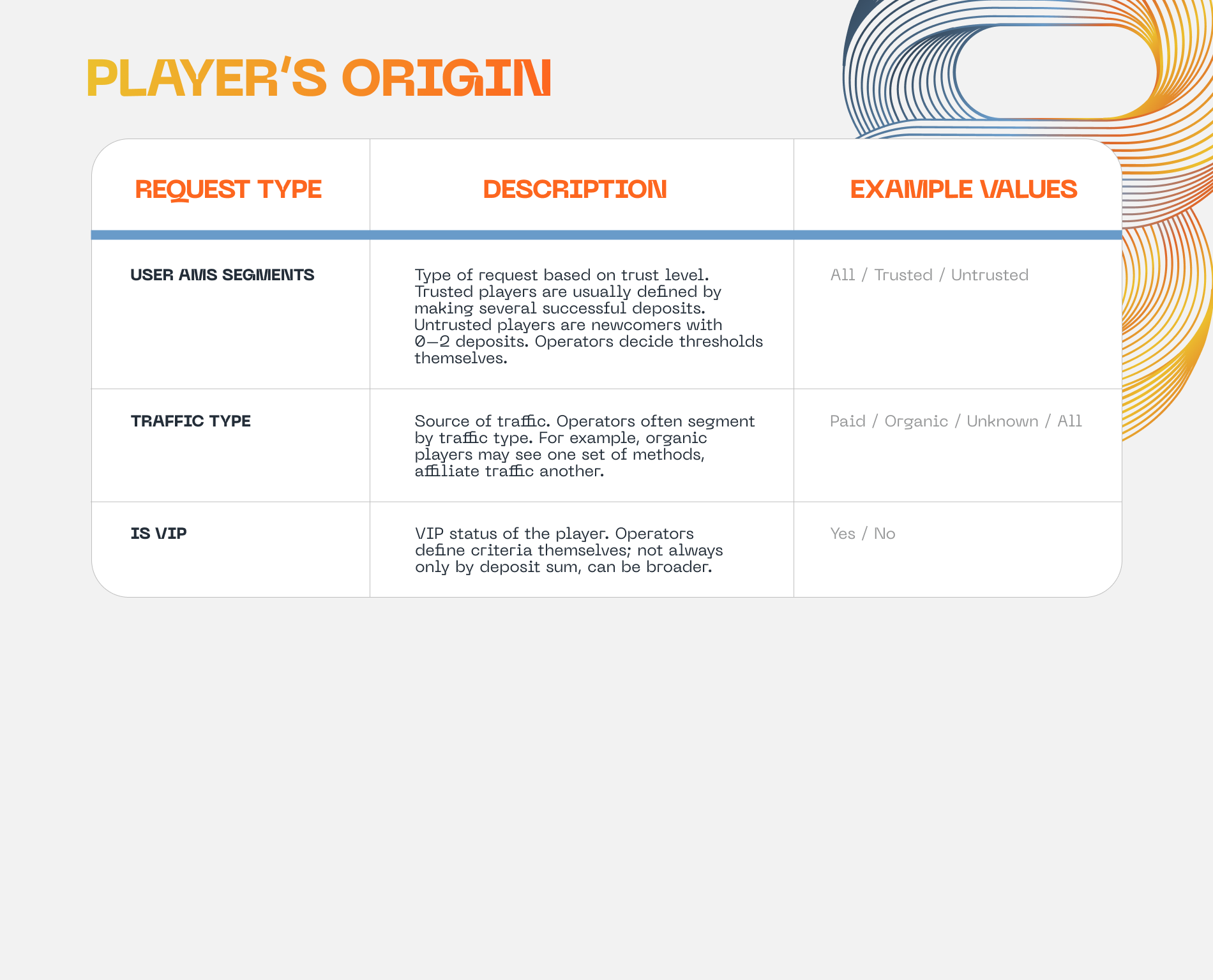
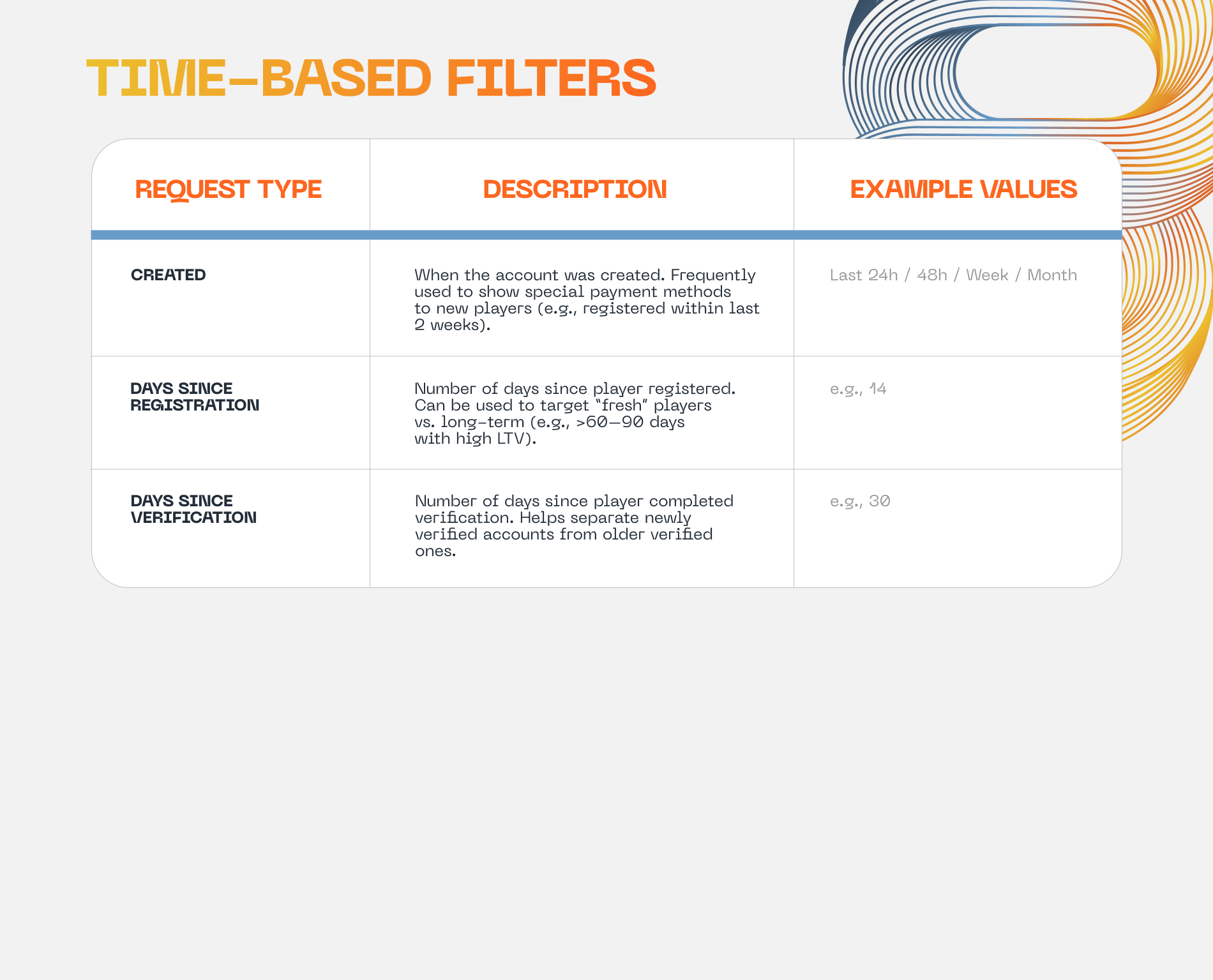
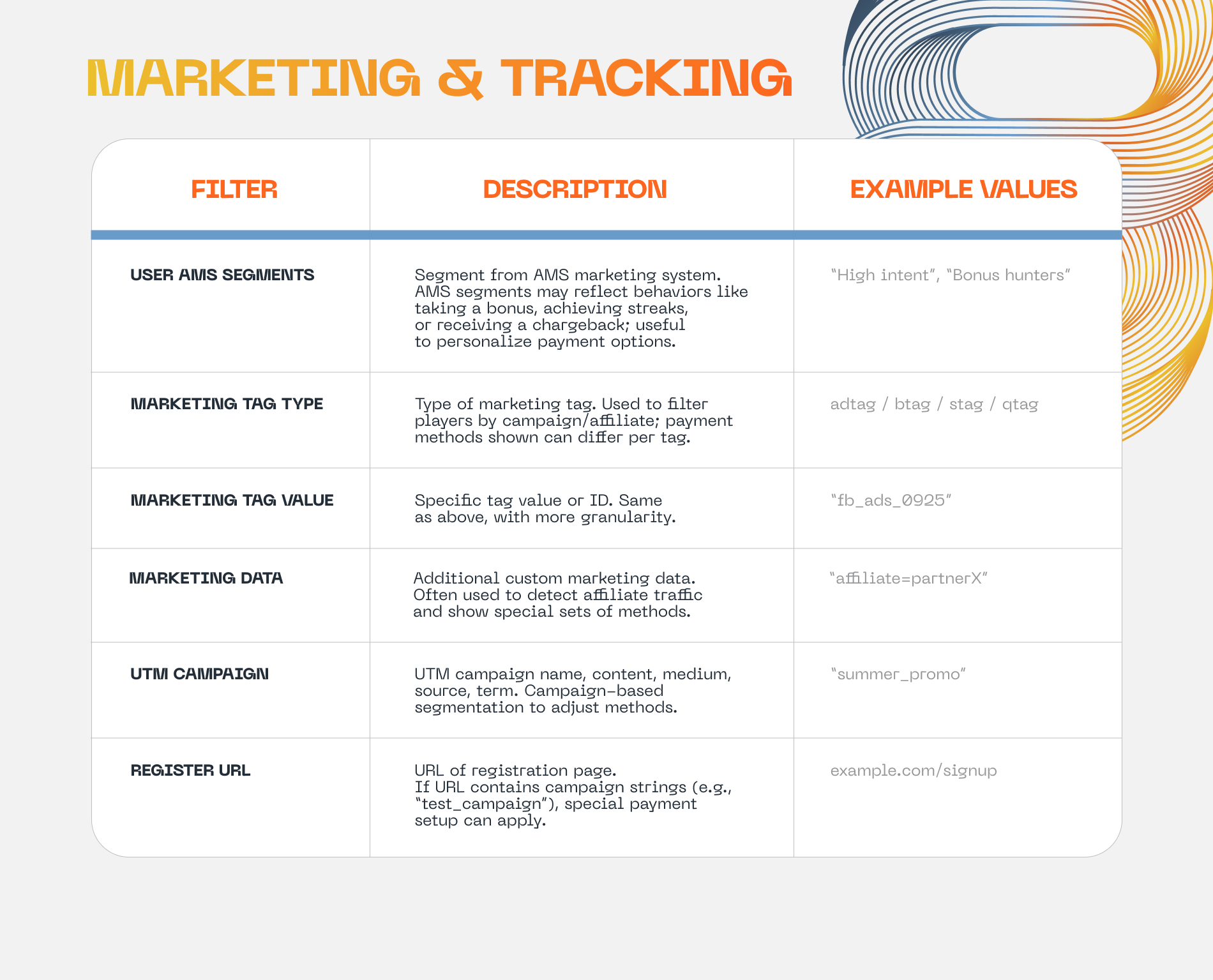
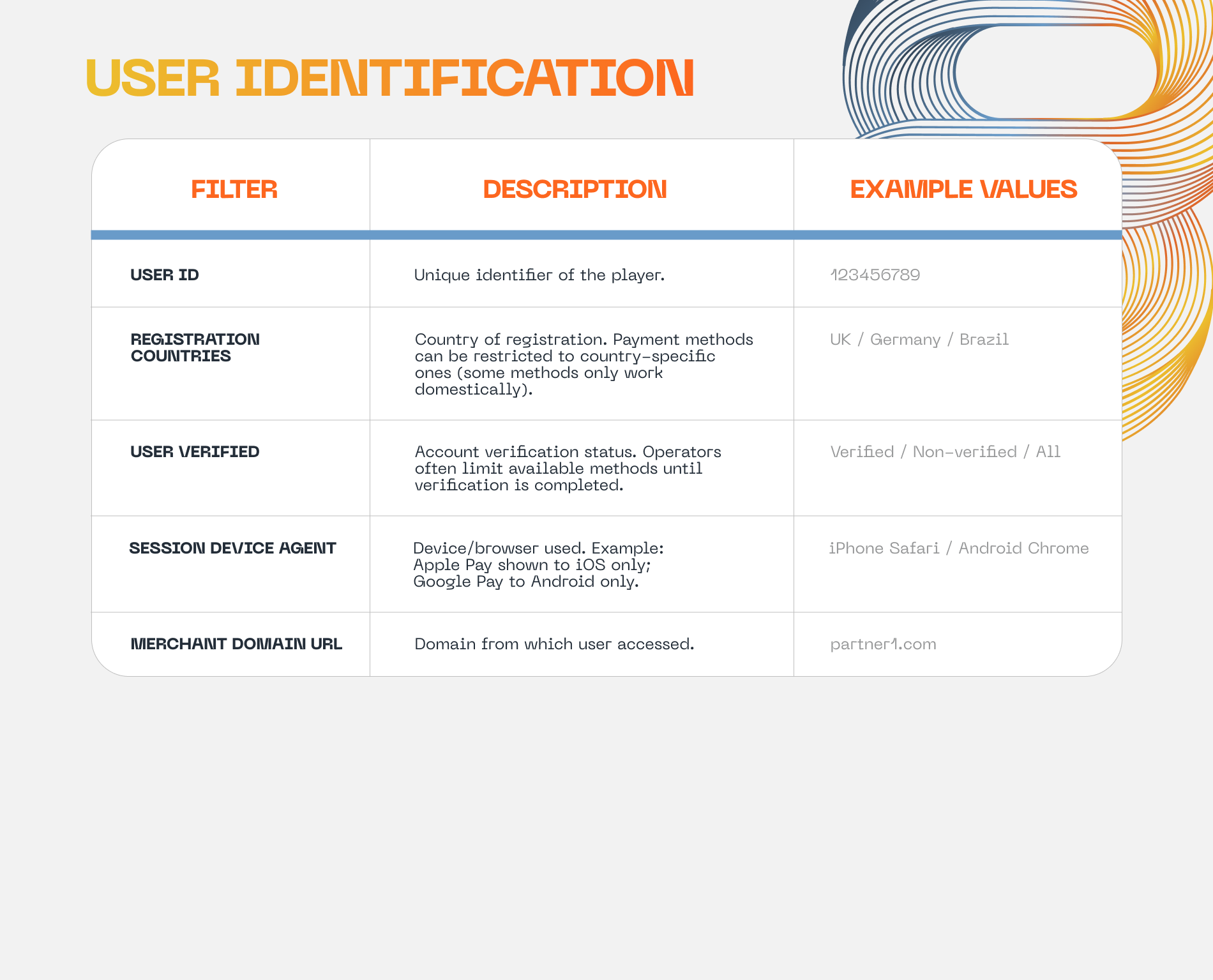
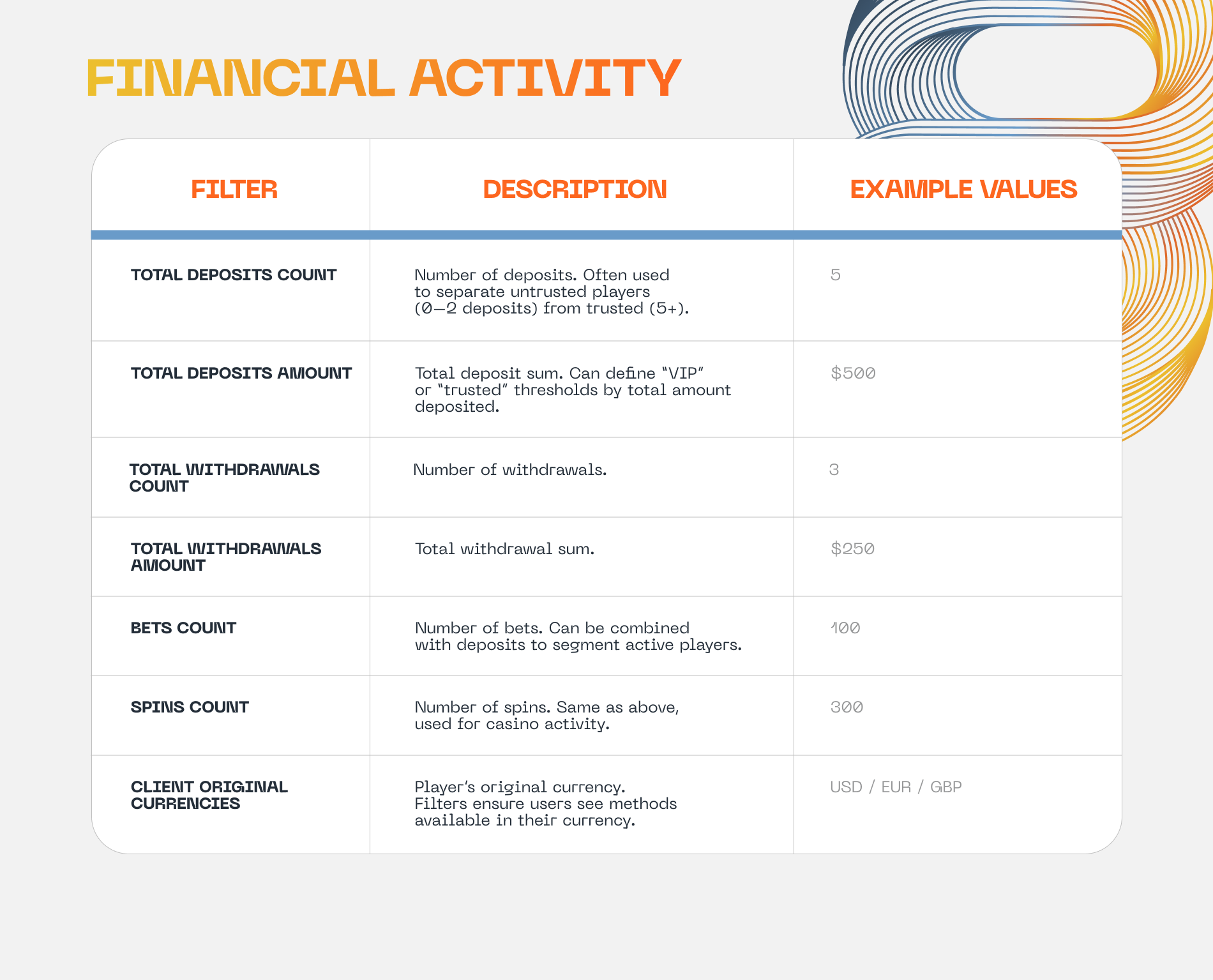
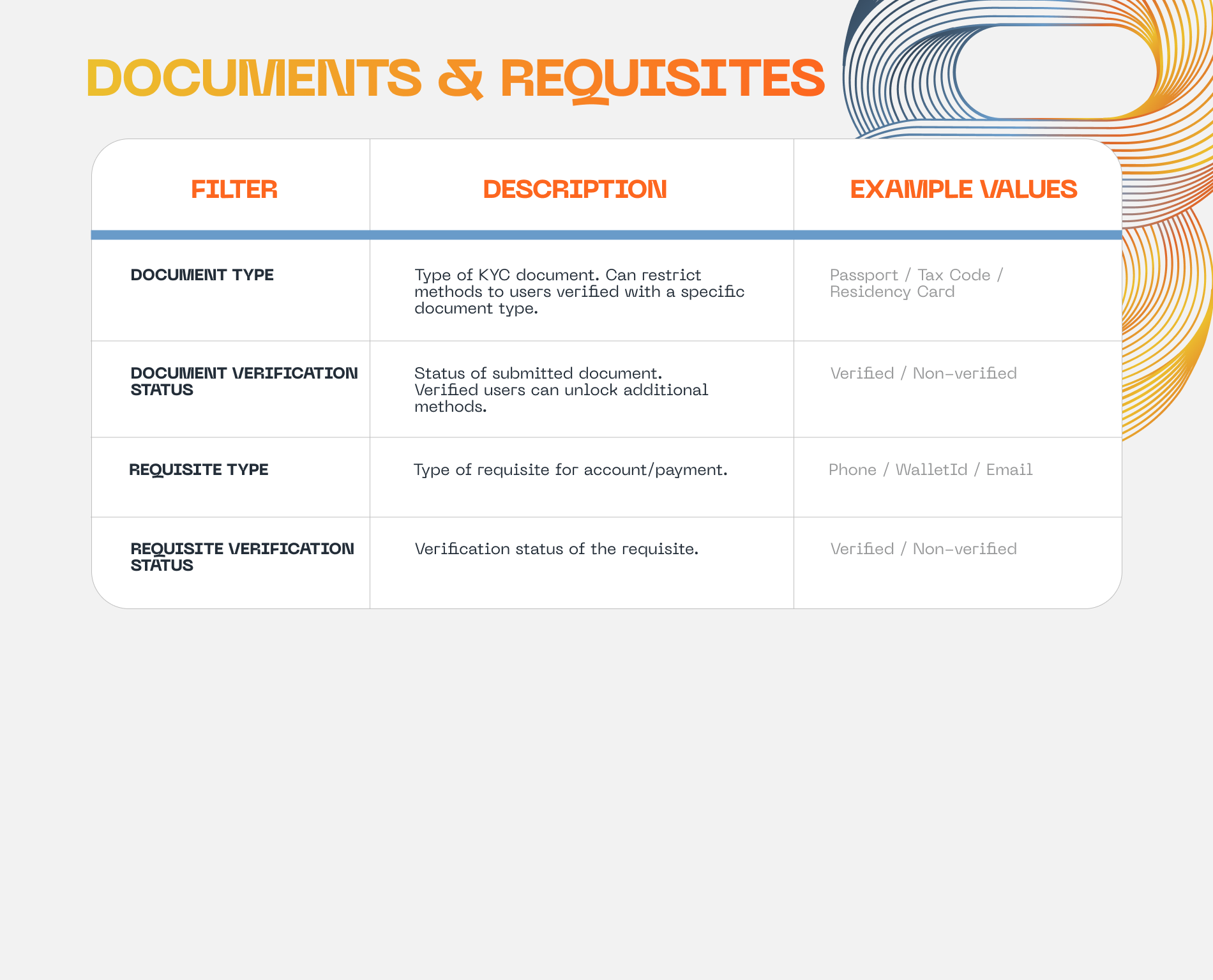
The flexibility comes from the 30+ available segmentation filters. Each filter defines a condition: who the player is, where they came from, what they’ve done on the platform, or what device they’re using.
The setup always starts with a baseline rule: a default set of payment options that ensures no player ever faces a blank screen. On top of this, you can stack up to 1000 custom rules, each with its own parameters. Filters work together as “AND” conditions, meaning a player must meet all requirements in a rule to see the corresponding setup. Rules are executed top-to-bottom, so the order you set matters, and results are saved instantly once you publish changes.
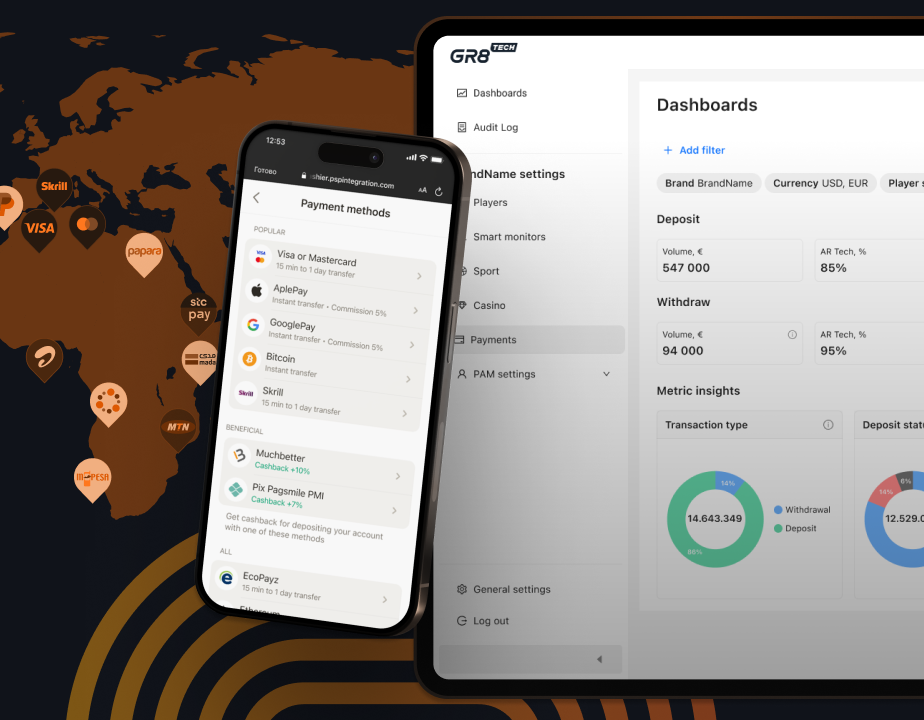
This way, you can have as many player segments as needed at once, each with a carefully tailored payment page. For example, you may build stricter flows for new affiliate traffic, broader options for verified regulars, and high-limit methods for VIPs. The same player could be segmented by geography, device, and verification status simultaneously, ensuring they only see relevant methods. Payment methods within each segment can be reordered by drag-and-drop to reflect approval rates, costs, or player preferences. It creates almost unlimited possibilities for fine-tuning payment strategies.
Be flexible in designing player-first payment pages tailored to individual behavior, geo, or device.
Achieve GR8 Payment Performance
How to Choose Payment Methods for Different Segments
Filters decide who sees which payment methods. But you still need to decide which options to show and why. The prioritization of methods on the payment page is not random—it's a business decision shaped by specific considerations:
- Approval rates come first. A method’s position on the payment page is often determined by its historical success rate. If 95% of transactions through a local instant bank transfer are approved, operators are likely to place it at the top for players in that market. A method with a 60% approval rate, even if popular, may be pushed down or hidden to avoid failed deposits.
- Transaction fees matter. Each provider charges different fees. Operators weigh conversion against cost: a high-fee e-wallet might be deprioritized in favor of cheaper bank transfers, unless the player segment strongly prefers it. For VIPs, where loyalty outweighs margins, operators often willingly absorb higher fees to offer premium options.
- Player preferences by segment. Operators also look at which methods resonate with specific groups. For example, younger players tend to gravitate toward Apple Pay or Google Pay, while VIPs prefer crypto or premium e-wallets with higher limits. Segment-specific ordering ensures the payment page feels familiar and convenient.
Besides, the selection of payment methods and their order for various segments aren’t fixed. From my experience, the key to getting the most out of this functionality is ongoing optimization.
At the start, I usually run a couple of training sessions to help clients get familiar with the system and validate their first setups. After that, they take over and manage everything themselves.
Some clients even have dedicated teams that constantly monitor performance and fine-tune the rules. This continuous adjustment is what makes the tool so powerful—it's not a one-time configuration, but a living system that evolves together with the operator’s business needs.
Every payment method, order, and limit is chosen to maximize approvals, manage costs, and match player expectations.
How Segmentation Changes the Payment Page: 3 Examples
Segmentation directly determines what players see when they want to make a deposit. Let’s take a look at three examples showing how our clients configure filters and what the resulting payment page looks like.
Case 1: New Untrusted Players from Paid Traffic
Players acquired through advertising campaigns often carry a higher risk. They are new, have little or no deposit history, and usually haven’t completed verification yet. To protect the platform, operators start these users cautiously.
Filters used:
- Request type: Untrusted (0–2 deposits)
- Traffic type: Paid
- Created: Last 7 days
- User verified: Non-verified
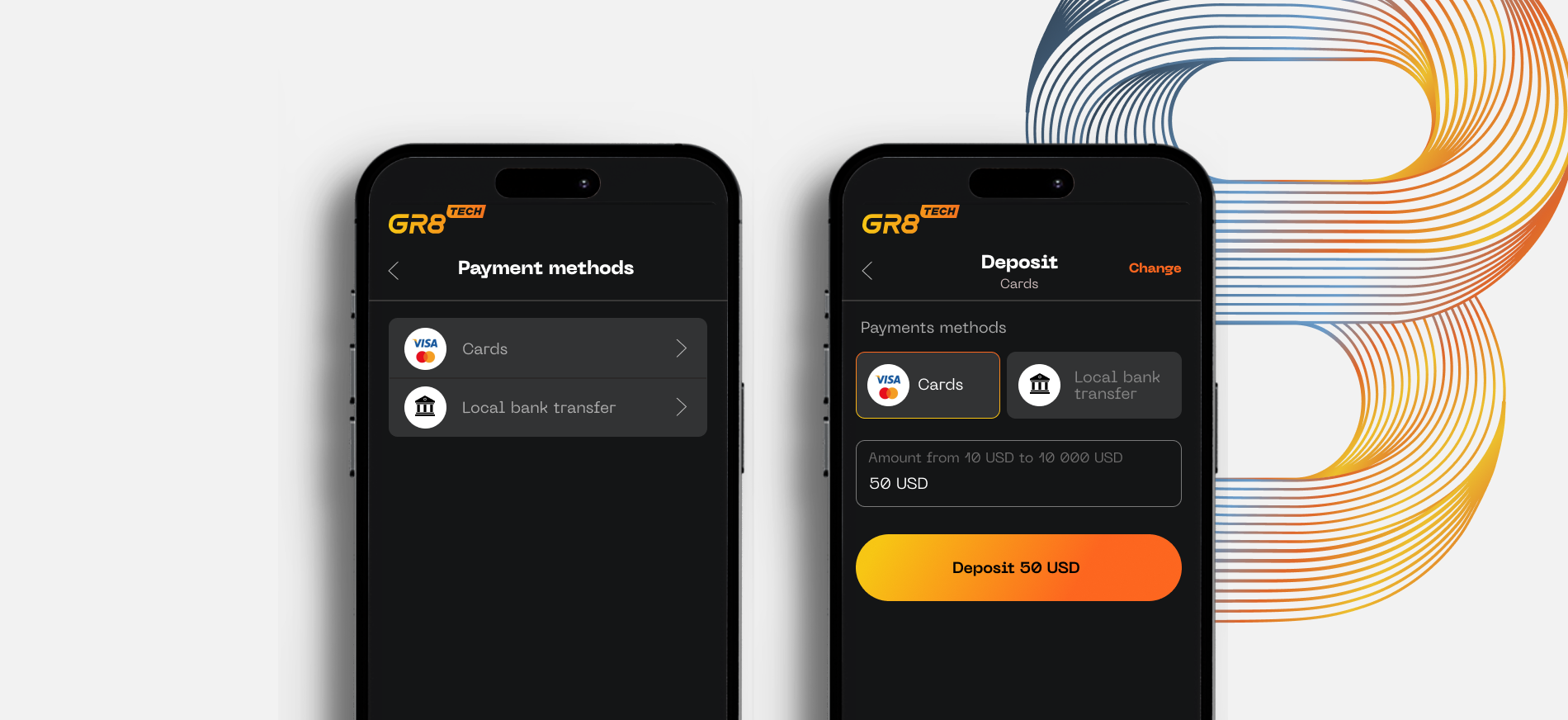
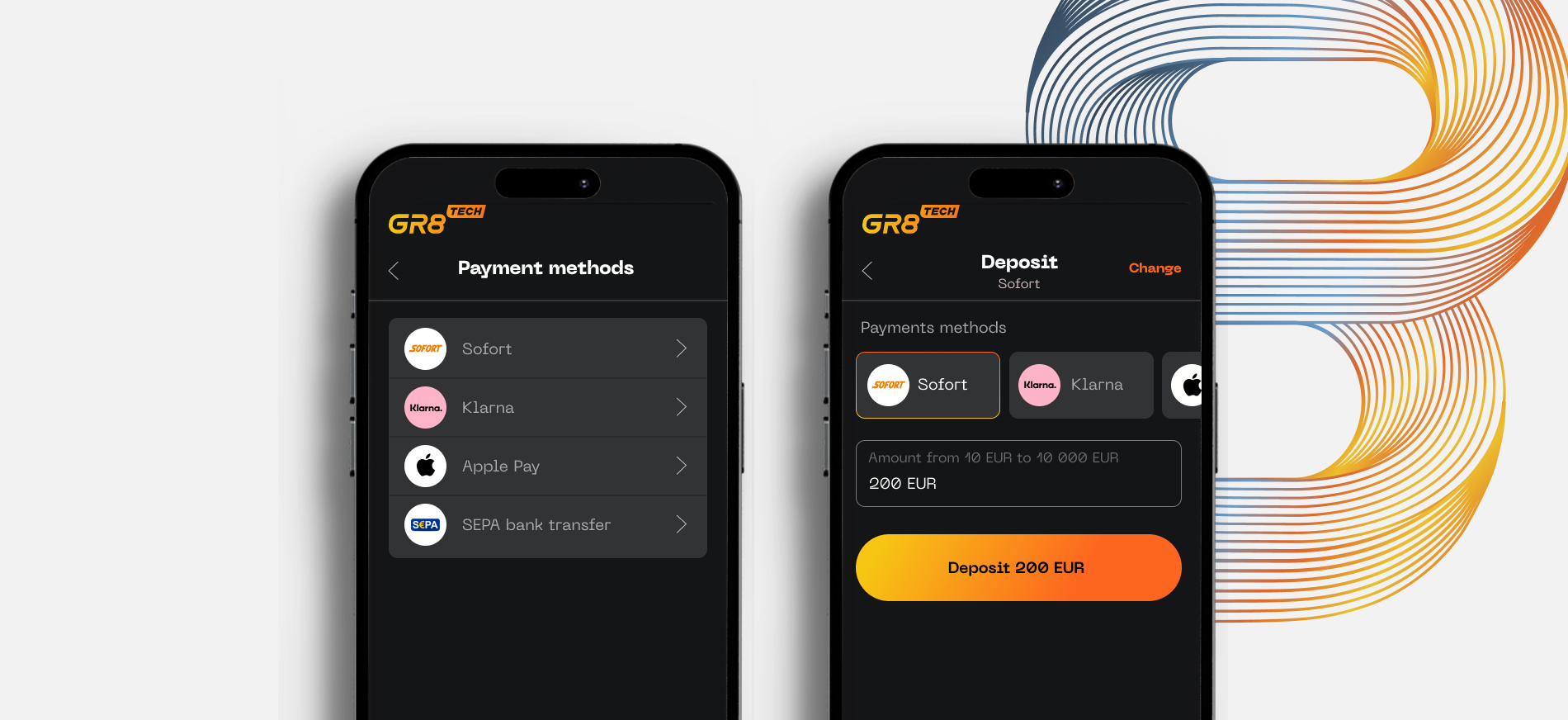
For such segments, clients typically choose payment options like card payments or local bank transfers. It allows the player to test the platform while minimising the platform’s exposure to fraud and chargebacks.
Case 2: Returning Trusted Players with Local Preferences
Regular, verified players are the backbone of most operators’ revenue. A player from Germany using an iPhone, with a solid deposit history, falls into the trusted category and is rewarded with more flexibility and local convenience.
Filters used:
- Request type: Trusted (5+ deposits, >€1000 total)
- Registration country: Germany
- Session device agent: iPhone
- User verified: Verified
Because this player is reliable and verified, the payment page highlights the most familiar and high-performing methods in their market, along with device-specific options.
Case 3: VIP Players from Affiliate Traffic
High-value VIPs often join through affiliate programs. These players deposit and withdraw large sums and expect premium service from the moment they log in.
Filters used:
- Is VIP: Yes
- Marketing tag type: Affiliate campaign (btag)
- Total withdrawals amount: >$10,000
- Client original currencies: USD
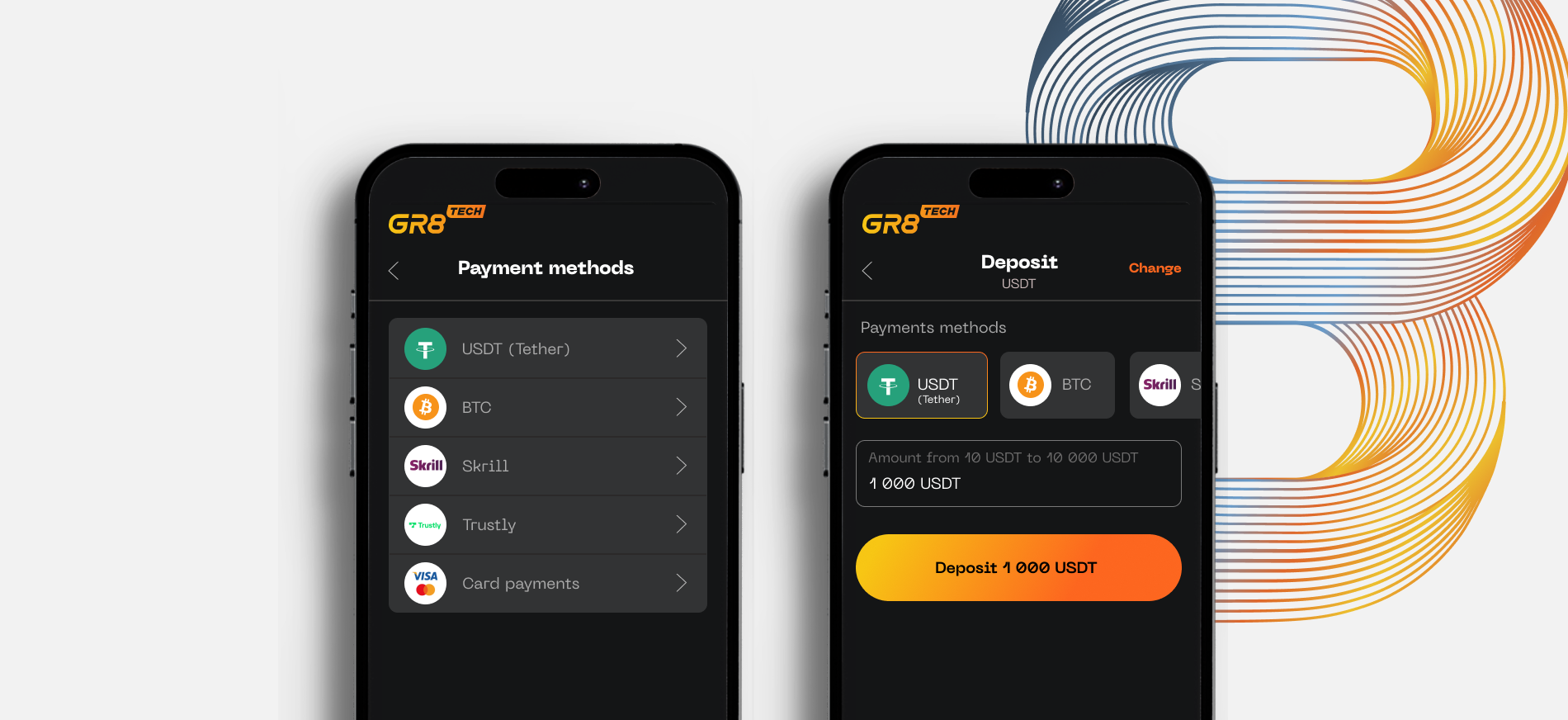
For this VIP profile, the payment page features high-limit, USD-friendly methods, ranging from cryptocurrency to premium e-wallets.
Benefits of Segmenting Players’ Payment Experiences
- Higher conversion rates. By showing the right methods in the right order, you reduce drop-offs at checkout. Trusted players get their preferred methods upfront, while untrusted newcomers are guided toward the safest options. Each adjustment improves the chance that a deposit goes through successfully.
- Reduced fraud and chargebacks. Segmentation adds friction only where it’s needed. New or suspicious accounts face extra KYC, velocity checks, and capped limits, while trusted players move quickly through the funnel. This balance protects you without punishing your best customers.
- Stronger VIP retention. For high-value players, payments are part of the loyalty package. Instant withdrawals, bespoke methods, and concierge-style flows signal that the operator values their business. In a market where 20% of players drive 70% of GGR, these touches directly impact lifetime value.
- Improved compliance and flexibility. Filters make it easy to align payment flows with regulations. You can restrict methods until verification is complete, enforce deposit caps per jurisdiction, or tailor experiences by traffic source and marketing tags. This flexibility helps satisfy regulators while supporting your growth.
- Future-proofing. With crypto, stablecoins, and AI-driven anti-fraud on the rise, segmentation frameworks ensure you can adopt new methods quickly. Visibility rules make it simple to test, localize, and roll out innovations without disrupting the entire payment process.
Wrapping Up
Payments for iGaming operators are a lever of performance, trust, and player loyalty. By tailoring payment experiences through segmentation and pre-routing filters, you can minimize fraud, boost approval rates, and deliver exactly what each player expects at every stage of their journey.
Trusted players stay engaged with smooth, familiar methods. VIPs feel valued through instant payouts and premium options. Even newcomers get a fair, controlled path to explore the platform safely. This balance of protection and personalization is what defines successful payment strategies in 2026.
Your payment page is not static—it's a dynamic, strategic tool. The sooner you treat it that way, the faster you’ll see improvements in conversion, compliance, and retention.
Smart Payments, Built In.
Hyper Turnkey comes with built-in payment segmentation, ready for expansion into new markets.
TALK DETAILS