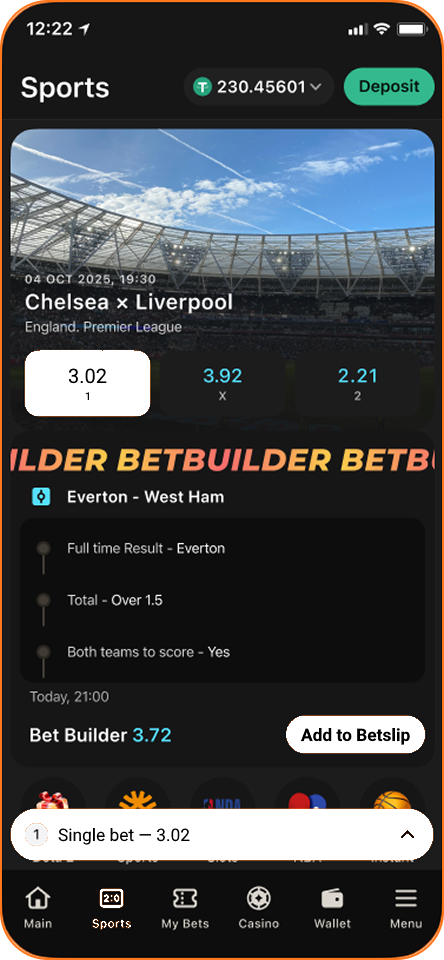
Eliminate developer bottlenecks and reduce content creation costs by 75%. Marketing teams become self-sufficient with intuitive tools.
Maintain unified brand experience across all touchpoints. Global content updates and theme management ensure consistent messaging..
Optimized templates and A/B testing capabilities drive 40% better performance. Personalized content for different player segments maximizes engagement.

Centralized multi-currency wallet (fiat + crypto). Seamless balance management across BTC, USDT, EUR, and more.
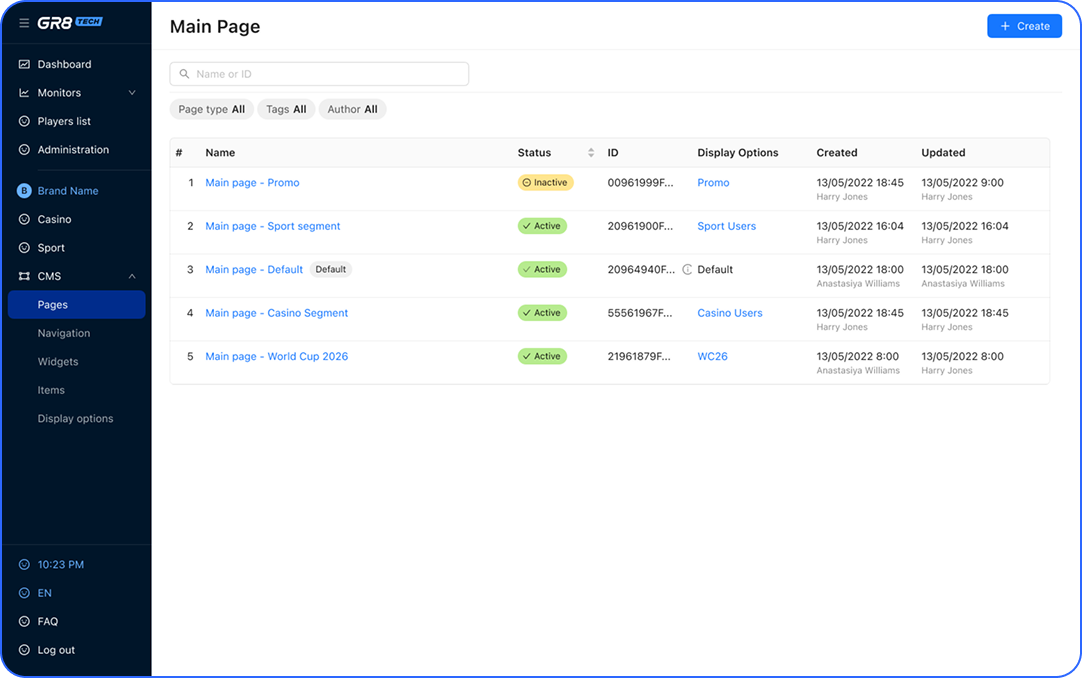
With our Content Management System you have the power to add, edit, and monitor your content directly in your platform.
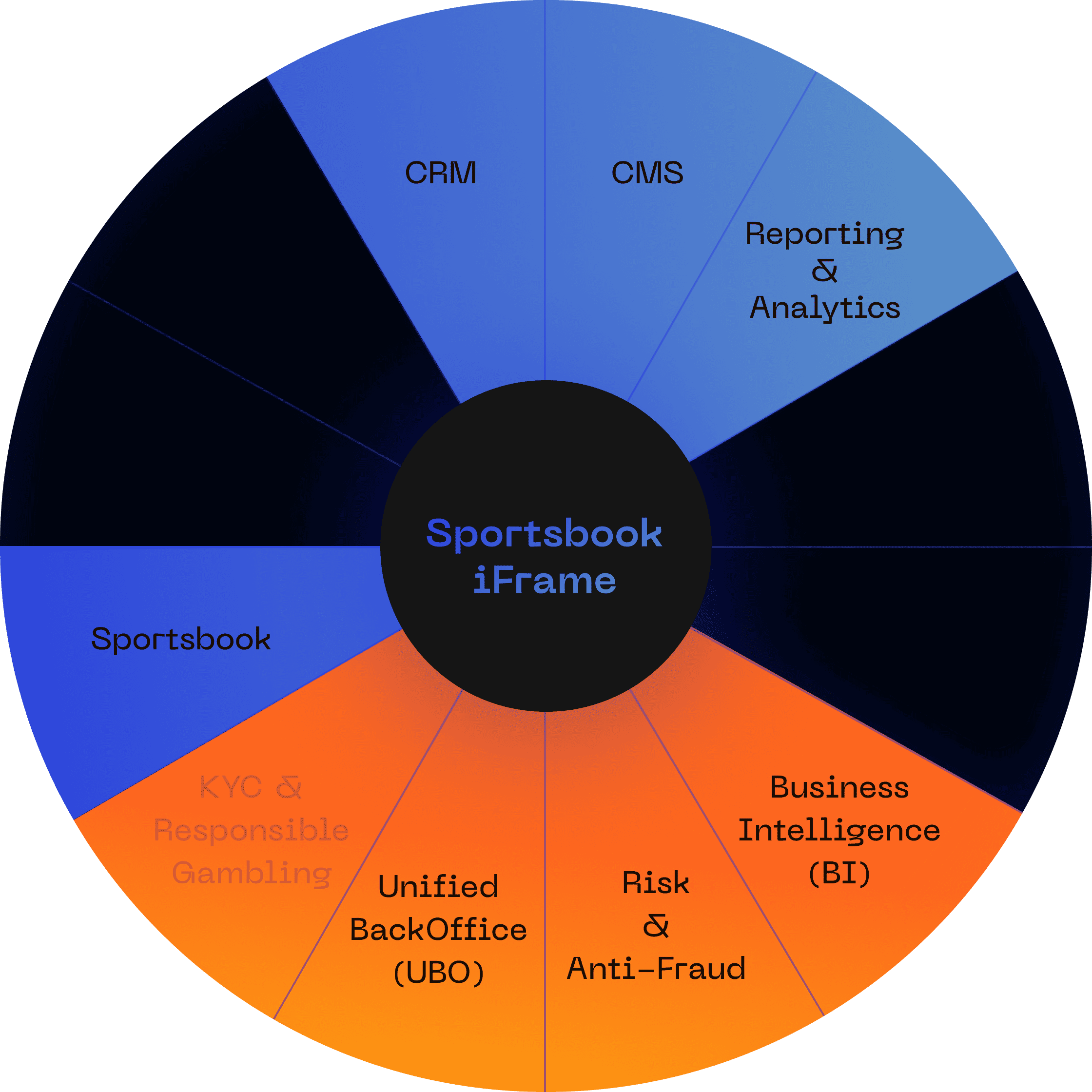
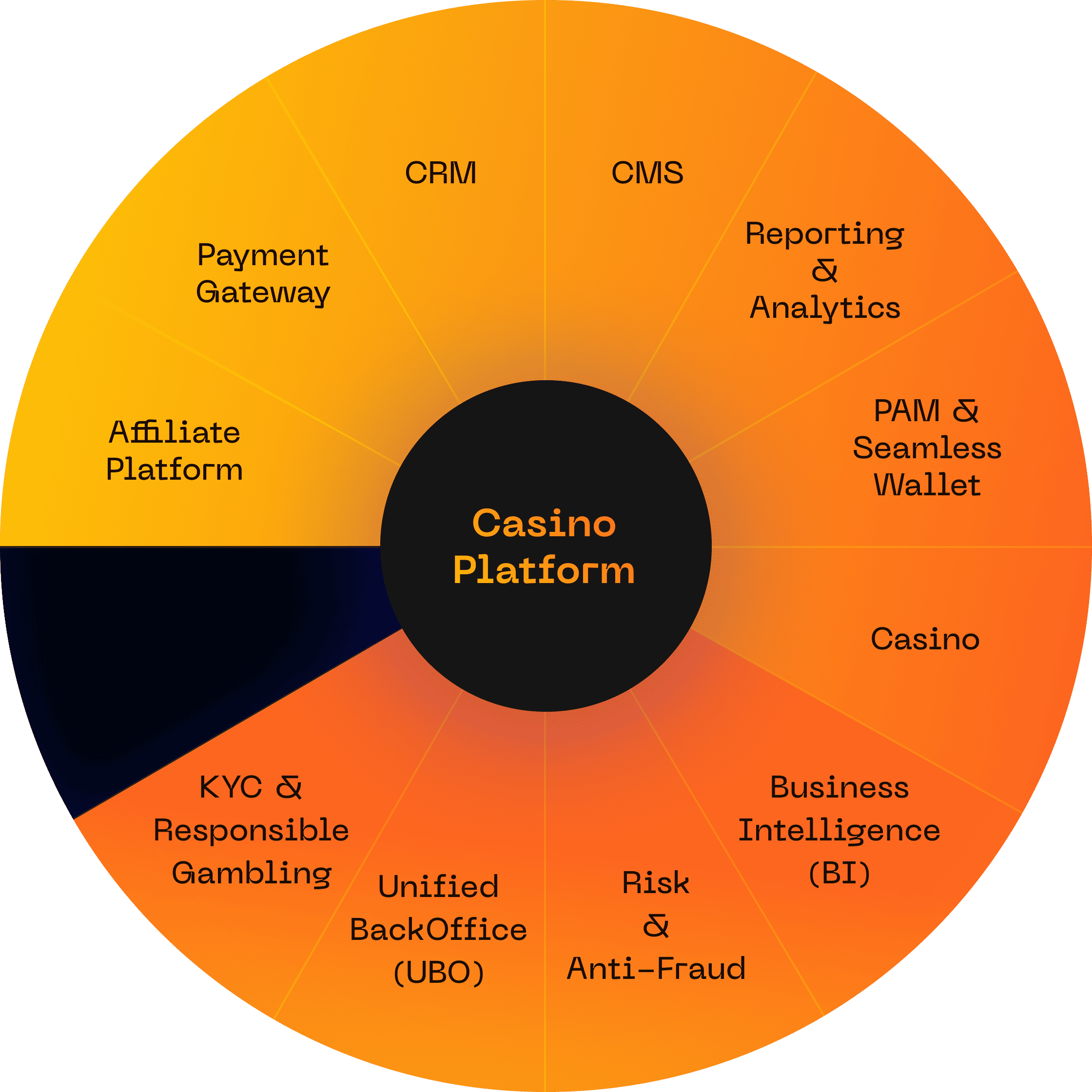
Select your optimal set-up and take the pole position in the iGaming technology race.
In the iGaming industry, a Content Management System (CMS) is a software platform that allows casino or sportsbook operators to create, edit, and organize all the digital content on their gambling website or app. It’s similar to a traditional website CMS but tailored for online casinos and betting sites. Using a CMS, non-technical staff can manage web pages, images, game listings, promotional banners, pop-up messages, and more without coding. In short, an iGaming CMS gives operators an easy interface to keep their site’s content up to date, from updating game information and publishing news to configuring promotional pages, making sure that the online casino or sportsbook's content is fresh and engaging for players.
An iGaming content management system software typically works as part of the platform’s back-office, providing a centralized dashboard where content managers can handle all site content. Through this interface, operators can draft and publish content in real time (or schedule it for later), and those changes propagate to the live site for players to see.
Modern iGaming content management services are often integrated across multiple channels, meaning the same system can push content to your desktop website, mobile site, and even native apps simultaneously. For example, if you upload a new banner or add a game description in the CMS, it will update on web and mobile platforms at once.
The CMS usually includes WYSIWYG editors (rich text editors), media libraries, and configuration tools, so creating a promo page or updating a navigation menu can be done with a few clicks. Behind the scenes, the content management system (CMS) stores this content (text, images, layout settings) in a database and delivers it to the front-end of your casino/sportsbook site. In essence, it separates content from code—letting you manage site updates without deploying new software. This streamlined workflow means faster content changes and less reliance on developers for day-to-day site updates.
Yes. The best casino management systems offer extensive customization options to ensure your site reflects your brand’s unique identity. You can tailor the look and feel of your player-facing pages by adjusting layouts, themes, and styles through the CMS.
Most systems let you upload your logos, choose color schemes, and design content templates that align with your branding. For example, GR8 Tech’s platform includes a UBO CMS module that lets operators configure their site’s navigation elements and style them to fit the brand’s design, including custom menu sections, icons, text vs. icon display, and alignment options. In practice, this means you can create a distinct user interface for your casino or sportsbook (like a unique header menu or lobby layout) via the CMS settings.
Additionally, many CMS platforms support custom CSS or skins, so you can implement specific design requirements. Overall, the CMS is built to be brand-friendly: you maintain full control over content presentation, ensuring your online casino looks and feels precisely as you envision, without altering the underlying platform code.
Absolutely. One robust casino content management system can manage content across multiple platforms and channels. In the iGaming context, this typically means a single CMS backend controlling the content for your desktop website, mobile website, and mobile apps simultaneously. You don’t need separate content systems for each device—the CMS publishes a unified content set that is optimized for different form factors.
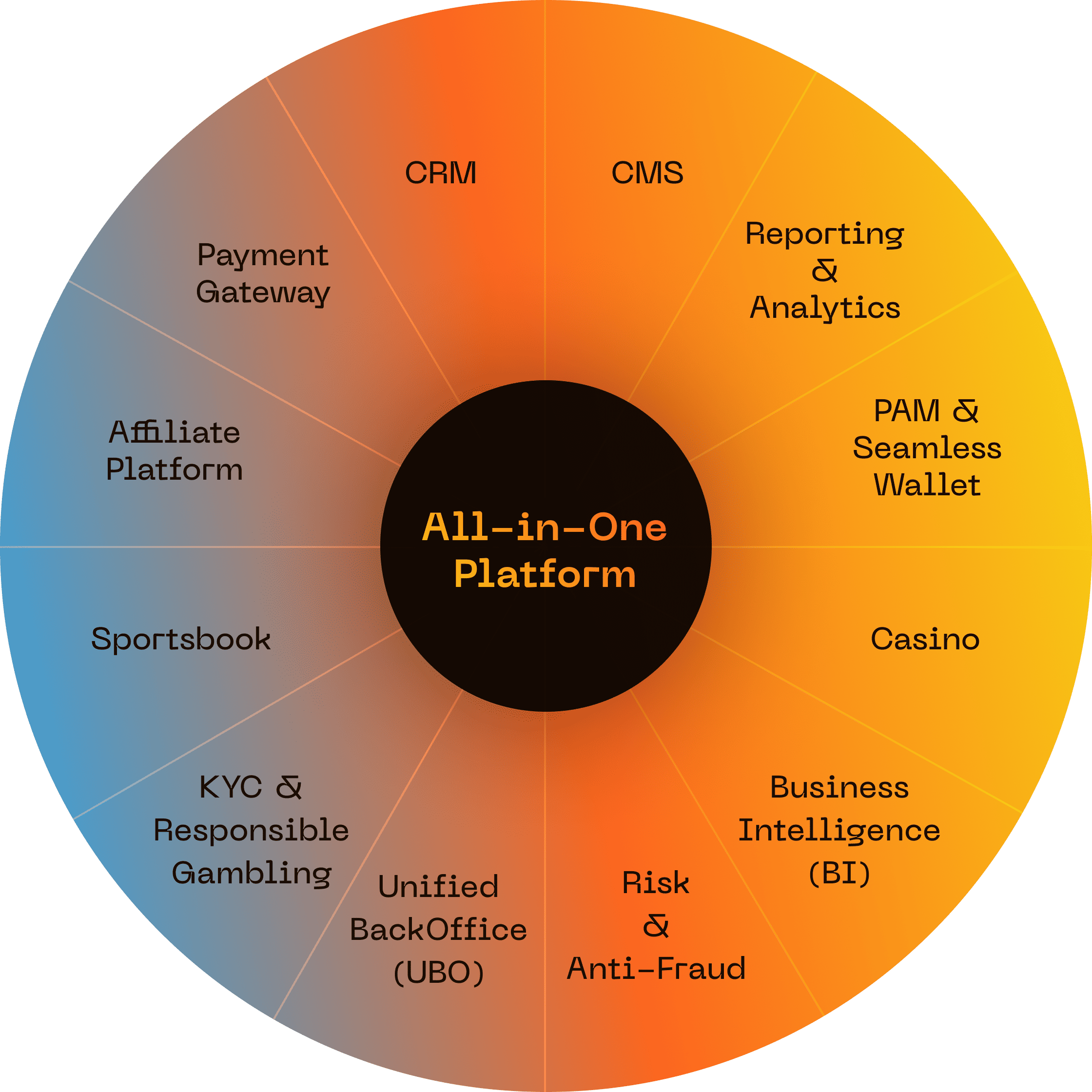
Furthermore, if your business spans multiple verticals (e.g. online casino, sportsbook, poker) or even numerous brand sites, a capable CMS for casinos and betting can often handle all those under one umbrella as well. Many modern iGaming platforms have a unified back-office that integrates the CMS with other modules, allowing you to use a single interface to manage content across products.
For example, you could use a single CMS instance to manage both your casino and sportsbook content, ensuring consistency across your brand. This centralization reduces duplication of effort: you enter content once and it appears on all chosen platforms. It also ensures that promotions or updates roll out simultaneously everywhere, whether a player accesses your services on the web or mobile.
Yes. A modern iGaming CMS directly supports your digital marketing by letting your team launch, adjust, and target campaigns without waiting on developers. With proper CMS integration, marketing can publish new promos, seasonal landers, and tournament pages in real time, align messaging across desktop, mobile, and email, and keep every channel on-brand.
The same system also lets you refine SEO elements such as page titles, URLs, and page structure so you can compete for high-value search traffic. Because leading CMS tools connect to CRM and player data, you can show different offers to different segments (first-time depositors see a welcome boost, high-value bettors see a retention perk), and you can test which banner, headline, or CTA actually converts.
This ability to personalize, ship fast, and iterate based on live performance data turns the CMS from a passive website editor into an active marketing engine that improves acquisition, engagement, and lifetime value.
The cost of integrating a CMS into an iGaming platform can vary widely depending on the scope and the provider. If you’re obtaining a full iGaming solution (which includes a CMS as one component), typically you might encounter an upfront integration or setup fee, plus ongoing licensing or revenue-share fees. As a rough guideline, industry consultants note that integration fees for platform components (like a CMS) can range roughly from $5,000 to $25,000. This would cover the work of connecting the CMS with your website and other systems. Additionally, customization costs (tailoring the CMS so it doesn't look like a generic template) might add another ~$10,000 to $50,000, depending on how much you want to personalize the front-end design and features.
If you are going for a white-label casino management system or turnkey casino CMS platform, the CMS might be included in a package deal. In those cases, you often pay a one-time setup fee (which could be on the order of tens of thousands of dollars) and then monthly fees or revenue share that cover the CMS and all other modules. For instance, one white-label cost breakdown suggests a one-time platform setup fee of $10k–$30k, which includes software configuration and “brand skinning” (visual customization); CMS work is included in that. Then there may be monthly platform fees or a revenue-based fee that effectively covers ongoing CMS usage and support.
A custom-built CMS will have a very different cost profile (potentially $50k+ just for development) compared to using a provider’s existing CMS.
IGaming businesses rely on a CMS for sportsbook and casino operations because it serves as the central hub for managing all live content. Without it, updating odds, adding new games, or publishing promotions would require manual developer input, slowing time-to-market.
A modern CMS serves as the backbone of efficient operations, enabling non-technical teams to update sites instantly, synchronize marketing messages, and maintain brand consistency.
Through CMS integration for iGaming, all elements, such as content, player data, and promotional tools, connect seamlessly, enabling rapid reactions to events, localized updates, and regulatory compliance.
In other words, iGaming content management services keep platforms fresh, accurate, and dynamic, ensuring that both casino and sportsbook users see relevant content at the right time.
A robust casino CMS is central to efficient online casino management, enabling operators to control content, branding, and player experience from a single interface.
With a CMS for online casinos, teams can instantly update promotions, games, or announcements across languages and regions, ensuring global consistency and faster time-to-market. The same system personalizes offers for different player segments and synchronizes updates with CRM or bonus tools, driving engagement and retention.
For sportsbooks, a sports betting CMS supports real-time odds, event updates, and localized campaigns, all within a secure, compliant environment. Scalable by design, a modern CMS grows with your operation, whether you expand into new markets or launch multiple brands, keeping performance stable while streamlining workflows and marketing execution.
A modern CMS casino management system handles nearly all player-facing content for both casinos and sportsbooks. Key areas include:
1. Web Pages and Text: Operators can edit homepage copy, T&Cs, or blog articles directly in the CMS, keeping all static and promotional pages current without developer input.
2. Games and Lobbies: CMS software for casino operators lets teams organize slot or table titles, update thumbnails, and feature new releases, giving complete control over what appears in the game lobby.
3. Promotions and Bonuses: A betting CMS manages banners, pop-ups, and event pages, allowing quick scheduling of new campaigns and targeted regional offers.
4. Media and Interface: Built-in libraries store logos, images, and videos, while menus or UI elements, like sportsbook tabs or casino sections, can be adjusted instantly.
5. Localization: Multilingual and jurisdictional variations are managed from one dashboard, ensuring the right content and currency display for each region.
Together, this casino and sports betting CMS software centralizes updates, streamlines workflows, and keeps every visual and textual element of your iGaming site aligned and consistent.
Yes. A modern casino management platform is built to operate globally, and multilingual capability is a core feature of its CMS module. Operators can create, edit, and publish localized versions of every page, ensuring brand consistency across virtually any market. The same interface keeps all translations synchronized and easy to update, giving players a native-language experience wherever they log in.
While currency logic is handled mainly by payment and wallet modules, the CMS works in tandem with them to display region-specific pricing, symbols, and offers. This means the same promotion can appear as “C$100” in Canada or “€100” in Europe, with each version managed from a single centralized dashboard.
Designed as part of a comprehensive CMS software for iGaming operators, the CMS bridges content, language, and transactional layers, helping brands manage multiple locales effortlessly while maintaining speed, accuracy, and compliance across every market.
A CMS streamlines how operators manage games, bonuses, and promotions through one intuitive interface. You can instantly feature a new slot in a “Game of the Week” section, reorder categories like blackjack or roulette, or hide region-restricted titles without developer input.
Bonus campaigns are just as simple: create a promo page, upload graphics, and schedule it. For example, a sportsbook free-bet banner going live Friday at 6 PM and closing Monday automatically. Need to extend a promotion or edit terms? Update it in seconds.
For multi-stage tournaments, prepare all pages in advance and toggle them as events progress. Because modern CMS casino software connects to game aggregators, CRM, and payment modules, enabling a game or promotion in the CMS can instantly activate it platform-wide. The result is faster launches, consistent branding, and effortless coordination between marketing and operations.
An iGaming & casino CMS improves player engagement by keeping content dynamic, personalized, and accessible. Operators can instantly update promotions, leaderboards, and new game highlights, ensuring the site always feels active.
Personalization tools let you tailor banners, menus, and offers to each user group: a new player sees onboarding tips, while a VIP sees loyalty rewards. Navigation and layouts can be adjusted on the fly, removing friction and keeping the interface intuitive. Localization features deliver region-specific languages and imagery, making players feel at home. When news like jackpot wins or event results appears immediately, trust and excitement grow.
In short, a CMS enables rapid updates, targeted experiences, and clear communication, turning a static casino into a living environment that keeps players returning.
A modern CMS streamlines operations by letting casino and sportsbook teams run the front end without waiting on developers. Instead of opening tickets for every promo, payment logo, or banner change, marketing logs into the CMS, edits content, and ships it live in minutes.
In GR8 Tech’s model, this cuts content launch time by up to 5x and reduces dependency on tech teams by about 60%, because campaigns, landing pages, registration funnels, and even sportsbook widgets are all built and scheduled directly in the CMS. Scheduling and auto-publish remove the need for night or weekend manual work: a Friday 18:00 odds boost banner can go live automatically and come down on Monday. Centralized, reusable content blocks let you update terms, compliance text, or responsible gaming warnings once and push that update everywhere, reducing errors and support noise.
Role-based access and audit trails inside the same back office let copywriters draft, managers approve, and compliance monitor changes with full accountability. Because GR8 Tech’s CMS sits within a unified back office that includes player management, KYC, casino catalog, and bet monitoring, operational teams aren’t passing work between systems; they’re working in one environment built to execute quickly and at scale.
A CMS and a PAM serve different functions within software for iGaming operators, but they work hand in hand. The CMS manages content: pages, banners, and UI, while the PAM controls player data, logins, wallets, and KYC.
In GR8 Tech’s unified back office both systems operate under one interface but remain distinct modules. This setup lets the CMS pull dynamic data from PAM, such as player names or loyalty points, to personalize content without duplicating databases. For example, the CMS can design localized registration forms, while PAM processes and verifies the submitted data. Together, they create a seamless user journey where content, data, and compliance operate in sync.
Best CMS software solutions for iGaming operators indeed follow this model: CMS for experience, PAM for player lifecycle, unified through API-driven integration rather than merged functionality.
A white-label iGaming content management system gives operators an instant, low-risk entry into the market. Instead of building tech from scratch, you launch in weeks on a ready platform that already includes a casino, sportsbook, payment, and CRM modules.
For example, GR8 Tech supplies pre-tested infrastructure with built-in compliance, multilingual templates, and responsive design, so you focus on branding and player acquisition rather than code or certification.
The cost model is lighter too: a setup fee plus revenue share replaces large development budgets. Because GR8 Tech maintains uptime, security, and feature updates, your CMS keeps evolving with no extra spend; our solution lets teams manage all content, promotions, and brand skins directly in one back office, cutting campaign launch times by up to 5x. For most platforms, such CMS software for casino operators delivers speed, scalability, and stability—the essentials for growing a new iGaming brand without technical debt.
A secure CMS integration uses layered protection: encrypted connections (SSL/TLS), role-based access, and optional 2FA for admins. GR8 Tech’s system logs every change for full auditability and meets ISO-grade security standards. Our CMS software runs behind firewalls and WAFs to block DDoS, XSS, and SQL injection attacks. Sensitive data is isolated from financial modules such as PAM, preventing cross-exposure while regular patches and real-time monitoring keep the platform compliant and threat-resistant.
A CMS scales an iGaming business by handling growth in content, traffic, and brands without adding cost or complexity. Operators can duplicate entire sites for new regions, add thousands of games, or launch new verticals from a single interface using prebuilt templates.
GR8 Tech’s scalable architecture leverages CDN caching and a modular design to handle traffic spikes during major events while maintaining speed and uptime. Centralized templates keep UX consistent across brands, and AI-driven tools automatically optimize content and promotions, allowing small teams to manage large, multi-market operations efficiently.