When speaking with casino business owners, we get the same questions. Most operators want to know how quickly they can add a new game, whether it’s possible to change RTP settings, or what business model brings higher profits.
To address these and other points, we turned to Lusine Khudaverdyan, our Head of Casino, who knows the ins and outs of casino solutions better than anyone. Here, she shares the answers based on numbers and real cases. No fluff or far-fetched conclusions—just practical insights you can put to work right away.
#1. What Are the Main Operational Benefits of Using a Casino Aggregator?
From my perspective, the biggest value of casino game aggregation platforms lies in optimized operations. Instead of juggling multiple negotiations, contracts, and tech support lines, operators access thousands of games through a single integration. This approach streamlines promo coordination while keeping compliance clear without the extra red tape.
There’s also a significant financial upside. Integrating a casino aggregator is far more cost-effective than connecting each game provider individually. It’s also much cheaper to support one integration than hundreds. On top of that, aggregators usually have a solid base of client operators, which allows them to set more competitive prices and special offers.
I actually see how an aggregator-based strategy drives growth for small and mid-sized casino businesses. It gives them the scale and flexibility of larger brands without complex infrastructure or heavy upfront costs.
Casino Aggregation Functionality
- Single API: One multi-provider integration through API for faster and more cost-efficient product release;
- Provider Catalog: Monthly updated game portfolio that lets operators diversify player experience and increase engagement;
- Game Release Calendar: Dedicated space for tracking all games launched simultaneously with the provider's release schedule and assessing their performance;
- Promo Calendar: Single hub that gathers all promotions and allows operators to plan activities with ease;
- Clear RTPs: Geo-targeted configurations and transparent RTP values, ensuring stable operations in regulated markets.
How Casino Game Aggregator Helps Operators
- Operational Optimization: Eliminate the need for a large tech support team required for coordination with game providers;
- Cost-Efficiency: Save 2–3% in margins compared to direct game integrations;
- Business Head Start: Access premium casino content and infrastructure without substantial upfront investments;
- Infrastructure Maintenance: Handle just one integration, not hundreds;
- Faster Scaling: Gradually extend game catalog and player pools, while minimizing repetitive technical work;
- B2B Partnership: Cooperate under a more predictable operator-to-aggregator model aimed at long-term margin growth.
#2. What Is the Process for Adding New Slots or Game Providers to a Casino Aggregator?
As a rule, casino aggregators can add any game to the catalog upon the operator’s request. This is one of the strongest advantages of casino aggregator software. Operators don’t have to chase game providers or struggle with technical setups. They just ask for the iGaming content updates, and the aggregator team takes over: contacts the provider, configures the integration, tests stability, and includes the games in the catalog.
Whether it’s a direct or reverse integration, aggregators handle the entire process, setting regional or global configurations and backup systems that ensure stable operations.
Casino Games Integration Options
- Direct API Integration: Aggregator connects to the provider’s API and adds the content into the platform;
- Reverse API Integration: Provider integrates into the aggregator’s API.
Specifics of Casino Provider Integration
- Onboarding: Every provider goes through credential setup, stability testing, and a final release in coordination with the aggregator team;
- Integration Requests: Operators can request specific providers beyond the existing aggregator catalog;
- Integration Period: Depends on the provider, but technically possible in 2 weeks;
- Failover Setup: Backup system configurations guarantee uninterrupted operations if a provider setup fails.
Integration Workflow for Operators
- Scenario #1: Operator sends a request for a new game to the casino aggregator → Aggregator contacts the game provider, manages the agreement, and configures the technical integration → Operator receives pricing and timeframes → Once agreed, the new game appears directly in the catalog after 2–3 weeks;
- Scenario #2: Operator negotiates pricing and terms directly with the casino game provider → Aggregator only supports the technical side and integration-related processes → Once launched, the new game appears directly in the catalog.
In my view, smooth game catalog expansion makes casino aggregation a truly powerful tool. It lets operators diversify content while staying focused on business growth.
#3. Can Operators Configure RTP Through a Casino Aggregator?
Yes, in theory, operators can adjust RTP through a casino aggregator, but the flexibility depends on the game provider and jurisdiction. In practice, however, RTP is locked by certification in many markets, and its change requires game re-certification (e.g., the UK, Malta). Besides, most providers don’t give casino RTP settings to operators, so when adjustments are possible, it’s the aggregator’s team that handles the setup.
At the same time, RTP isn’t just a technical setting. It relies on a balance between player satisfaction and operator margins. That’s why even a slight change must go through business analysis and operator approval before implementation.
RTP Configuration Specifics
- Transparency: Game providers always reveal RTP values, while aggregation platforms display them in the Game Release Calendar;
- Jurisdiction Rules: Aggregator may display only the selection of certified values, as in many markets, RTP is locked by certification;
- Provider Restrictions: Most providers do not offer RTP adjustment tools directly to operators;
- RTP Balance: Any change requires an in-depth evaluation since too low values reduce player interest, while too high RTPs affect operator margins.
How Operators Can Change RTP
- Step #1: Check whether the target market and the provider allow the game RTP management;
- Step #2: If the change is possible, submit a request to the aggregator team;
- Step #3: Discuss risks and terms with the aggregator team;
- Step #4: After all the agreements, wait until the aggregator applies the changes.
MANAGING MULTIPLE PROVIDERS? STOP THE CHAOS.
EXPLORE CASINO AGGREGATION
#4. How Does a Promo Calendar Work in an Online Casino Platform?
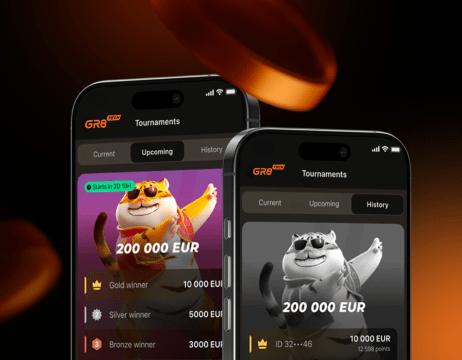
I would describe the Promo Calendar as a single hub that lets operators plan, track, and manage every promotion across a casino platform or aggregator. It presents a structured view of all the current and upcoming online casino campaigns, including network tournaments, jackpots, bonuses, free spins, and even deductions from GGR. With this tool, operators don’t waste time coordinating each promo with providers. They pick the event that matches their strategy and send a request, and the aggregator team takes care of negotiations and activation.
Value of the Casino Promo Calendar
- Simplified Planning: Get a unified casino promotions dashboard scheduling the events by multiple providers;
- Faster Launches: Avoid delays to market with the campaigns pre-configured by the aggregator and timely notifications;
- Promo Diversity: Access hundreds of cross-provider promotions, integrate discounts for game positioning and other promos, and manage them in one place;
- Integrated Assets: Use ready-to-go banners, logos, and other promo materials;
- Cost & Time Efficiency: Save resources by entrusting communication with providers to the Casino Promotional Calendar team;
- Player LTV Boost: Drive attention, increase LTV, and give players more reasons to stay active with the promotion tailored to your current strategy.
How Operators Can Use the Promo Calendar
- Step #1: Log in to the Calendar and browse the available promotions;
- Step #2: Select the campaign aligned with your player base's interests and marketing goals;
- Step #3: Create a task, and the aggregator’s team will negotiate everything with the provider;
- Step #4: Launch the promotion with pre-set assets and configurations.
#5. How Do Casino Platforms Detect and Prevent Fraud?
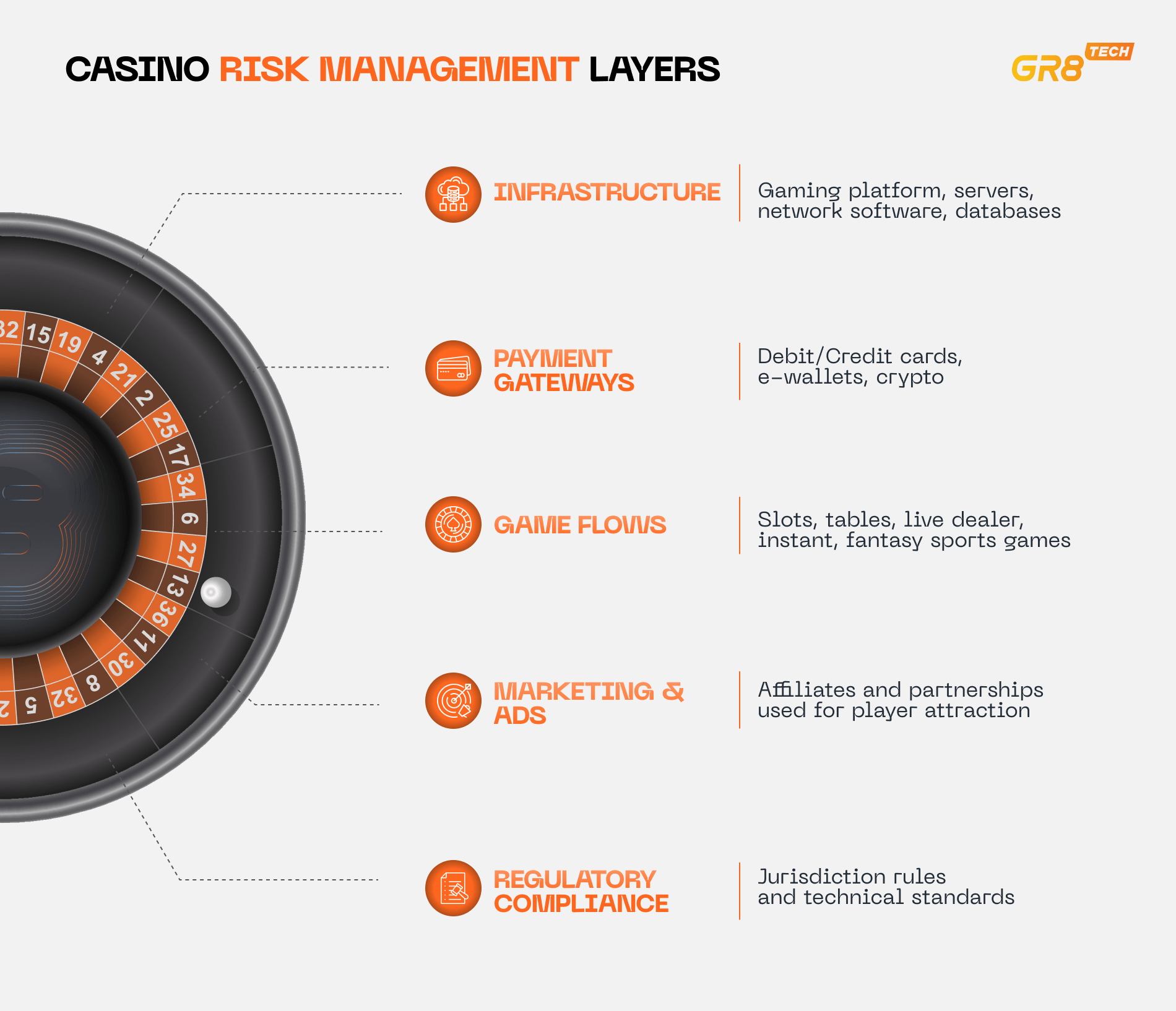
Casino platforms use multi-layered RAF tools, including AI tools, to identify and block risks. Since over 40% of attacks hit the deposit stage, casino risk management solutions prioritize that entry point. Besides, modern iGaming fraud detection tools focus on real-time. They analyze player behavior, flag anomalies, and stop fraudulent activity before it drains the operator’s margins. Kostiantyn Melnyk, my colleague and Team Lead of Casino RAF, is convinced that such proactive systems prove the greatest efficiency, keeping platforms secure and operations stable.
How AI/ML Tools Combat Casino Fraud
- Bonus Abuse: Cross-check player behavior and interactions, detect suspicious activity, and alert operators instantly;
- Jackpot Hunting: Analyze gameplay patterns and session timing, spot abnormal betting patterns, and freeze player accounts;
- Casino Game Fraud: Compare game outputs against expected statistical distributions, detect non-random patterns with a biased or compromised RNG, and pause the game or suspend affected accounts until verification;
- Carding: Identify IP/device mismatches and restrict unusual payments;
- Chargeback: Evaluate chargeback frequency and user history, and flag high-risk profiles for review;
- Multi-Accounting: Cross-verify personal details, unique device attributes, and geolocation data to identify duplicate or falsified registrations;
- Money Laundering: Match deposits, bet sizes, and withdrawal requests against known money laundering patterns to uncover networks of connected accounts that move funds in suspicious cycles;
- Affiliate Fraud: Explore traffic sources and click/sign-up correlations to divide bot-like activity from tech glitches.
Why Operators Use AI Anti-Fraud Systems
- Proactive Risk Control: AI systems don’t just catch fraud after it happens but analyze player behavior and flag risky patterns for human review before losses occur;
- Real-Time Action: AI tools can process tons of data and prevent attacks instantly in real-time;
- Full-Cycle Automation: Artificial intelligence can automate 90–95% of fraud management processes;
- Comprehensive Detection: Algorithms can detect anomalies not only on the platform performance, but also on third parties (e.g., game providers, payment methods, etc.);
- Revenue Protection: AI anti-fraud casino software saves 5–10% of GGR.
How to Choose a Casino RAF Solution
- Capability Scope: Choose 360° tools that cover different types of online gambling fraud (not just 1–2) and combine AI/ML, real-time monitoring, and human control;
- Real-Time Potential: Analyze how quickly the system can react in real-time, where even a 100-millisecond lag gives fraudsters an edge;
- Model Training: Make sure the ML models get trained at least once/twice a year or even more often;
- Custom Fit: Check whether the iGaming risk management solutions align with jurisdictional requirements and your risk strategy.
Fraud management isn’t something you set up once and forget. Risks evolve constantly, and so must RAF tools. The faster you process data, detect risks, and react across every market, the fewer chances fraudsters get.
Kostiantyn Melnyk, Team Lead of Casino RAF
#6. What Types of Reports Are Available in a Casino Platform?
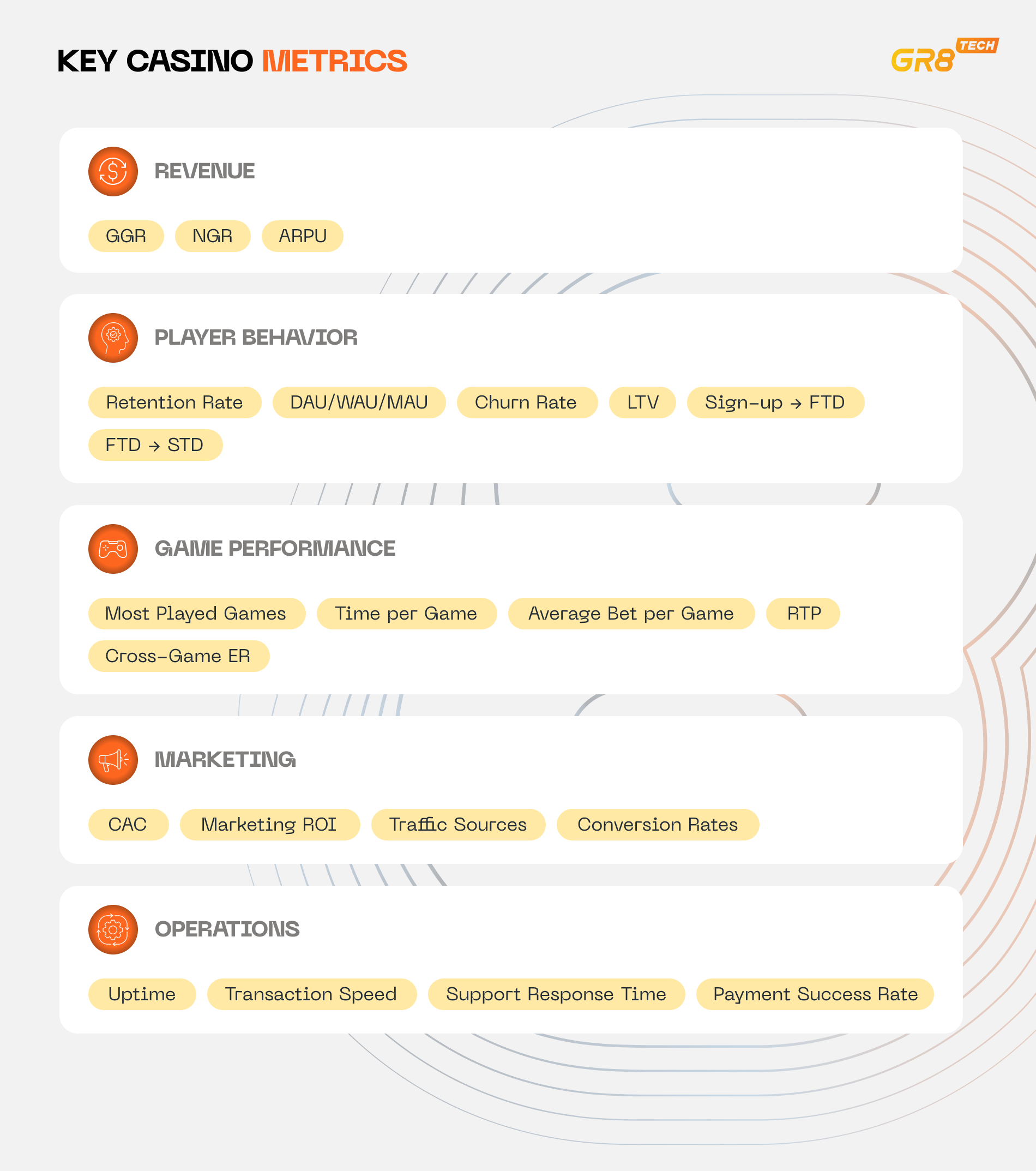
Most casino platforms come with real-time analytics tools that allow operators to generate reports in XLSX, CSV, PPTX, PNG, PDG, and other formats. For deeper analysis, casino software providers also offer BI tools like Tableau. They let operators track revenue, game performance, provider-related metrics, daily stats, and other key parameters. In some cases, advanced casino analytics is available directly in the back office, giving operators prompt access to the strategic data.
Tableau Characteristics
- Customization Scope: Tableau offers an extensive set of casino KPI dashboards easily adjusted to any operator’s needs;
- Analytics Coverage: Operator can track revenue, statistics per provider or game, and other daily/weekly/monthly performance metrics;
- Reporting Formats: Operator performance reports can be exported through PPTX, PNG, JPEG, PDG, XLSX, CSV, XML, etc.;
- Extra Options: If operators require special formats or parameters, the casino software provider can deliver them on request.
#7. How Can Operators Use AI to Improve Casino Operations?
Regardless of brand size or market, casino operators can infiltrate AI into different casino layers, from player analysis and personalized suggestions to dynamic CRM journeys and risk protection. I clearly see the positive impact of AI in gambling: communication becomes more relevant, sessions last longer, and players get a safer experience.
Capabilities of AI in Online Casinos
- Player Analysis: Track behavior and UX in real-time and predict what players are likely to enjoy;
- Player Segmentation: Split audiences into VIPs and regulars;
- RFM Models: Anticipate churn through Recency, Frequency, and Monetary segmentation;
- Casino Trend Model: Sort trend patterns by RTP values and define whether users prioritize a slot game that hasn’t paid out for a long time;
- Smart Recommendations: Suggest games, bonuses, rewards, emails, and avatars based on each player’s preferences;
- Lobby Personalization: Dynamically adjust the interface to the player’s activity;
- Fraud Protection: Identify risks early and flag suspicious activity for extra review.
How AI Helps Casino Operators
- Revenue Growth: Tailored recommendations and AI bonus optimization keep players engaged, which ensures more predictable revenue flows;
- Operational Focus: AI handles data-heavy analysis and automates manual processes, freeing teams for strategic tasks;
- Enhanced Security: With AI fraud detection, casino platforms increase resistance to most attacks.
#8. What CMS Features Do Casino Platforms Provide for Customization?
Today’s casino CMSs give operators huge flexibility, allowing them to adjust games, providers, banners, and pages without development. Whether you want to reshape the lobby, segment games, or refresh visuals, the casino management system lets you make changes in minutes. I’m convinced that the more actively operators use casino CMS software for customization, the more distinctive and profitable their brand becomes.
CMS Configuration Scope
- Game Segmentation: Group games by Slots, Live Casino, Top Games, New Releases, or any other way;
- Dynamic Catalogs: Place one game in multiple categories for maximum visibility;
- Visuals: Change images, build unique themes, animate icons, and manage banners;
- Layouts: Decide the order in which games appear in the lobby.
CMS Benefits for Operators
- Flexible Catalog Management: Update the portfolio quickly, without technical delays;
- Unique Player Experience: Personalize the lobby to different audience segments;
- Promo Flexibility: Customize special offers or seasonal campaigns with online casino branding tools;
- Engagement & Retention: Keep players active and revenue high with dynamic casino content updates.
At GR8 Tech, we go beyond standard CMS features. With our widget-based casino frontend, operators highlight top games, recent winners, or market-specific layouts in several clicks. This simplifies content management and keeps casinos agile.
Lusine Khudaverdyan, Head of Casino
#9. How Fast and Effective Is Casino Operator Support?
Usually, operators can resort to 24/7 casino support services through ticketing systems and get a response within one or two hours. But not every issue can wait. That’s why casino software providers prioritize requests and offer direct customer communication channels (chats). With this support level, operators not only gain quality technical assistance but also stay confident that every case is resolved promptly and properly.
Casino Support Channels
- Jira Service Management (JSM): Structured ticketing system to log, track, and resolve any requests;
- Live Chats: Slack and Microsoft Teams, ensuring direct conversations and timely action.
#10. What Is the Most Profitable Business Model for Casino Operators Partnering with Software Providers?
In my experience, casino operators gain the highest returns with a hybrid business model. It ties growth to performance while keeping the software provider interested in the operator’s success. Still, the final choice depends on the product type, target market, iGaming business stage, and overall strategy.
Online Casino Business Models
- Flat Fee: Operators pay a fixed monthly or annual fee for the platform to an online casino software provider, regardless of revenue. It’s uncommon for casino businesses to operate exclusively under a flat fee;
- Revenue Share: The platform provider and operator share the profits. This low-risk model usually attracts new businesses that want to test markets and minimize initial investment;
- Hybrid: This casino business model combines a fixed fee and a revenue percentage. It offers stability for providers and flexibility for operators, allowing them to achieve steady growth while balancing costs against performance.
Models for Casino Platform
- Hybrid Casino Model: Platforms typically charge a fixed fee (USD 30–50k set-up fee, and sometimes, a monthly minimum fee), plus a revenue share per provider based on GGR.
Models for Casino Aggregation
- Hybrid: Aggregators usually cooperate on a revenue share per provider, combined with a fixed security deposit of USD 10–50k;
- Revenue Share: Aggregation platform provider earns a percentage of the operator’s GGR, with profits depending on player activity, volume of bets, and casino performance.
GO LIVE FAST, SCALE WITH CONFIDENCE.
Access 250+ providers, 20k+ games, AI fraud protection, and flexible front-end widgets with a single HYPER TURNKEY integration.
LEARN MORE