










Traffic costs are rising, and so is market competition. Smaller brands feel the most pressure as they fight for visibility against well-established operators. Flexibility alone does not address these challenges anymore. To stay afloat, you must shift the focus from pricey acquisition to smarter retention. That’s why forward-looking operators put iGaming CRM at the center of their strategy.
In this article, I explain how it drives LTV and GGR and which mechanics work best across Sportsbook and Casino.
The Power of AI Inside iGaming CRM
Player engagement begins with consistent communication, and CRM systems ensure it. With AI-driven CRM, you can track user behavior and preferences and send messages that resonate with your audience.
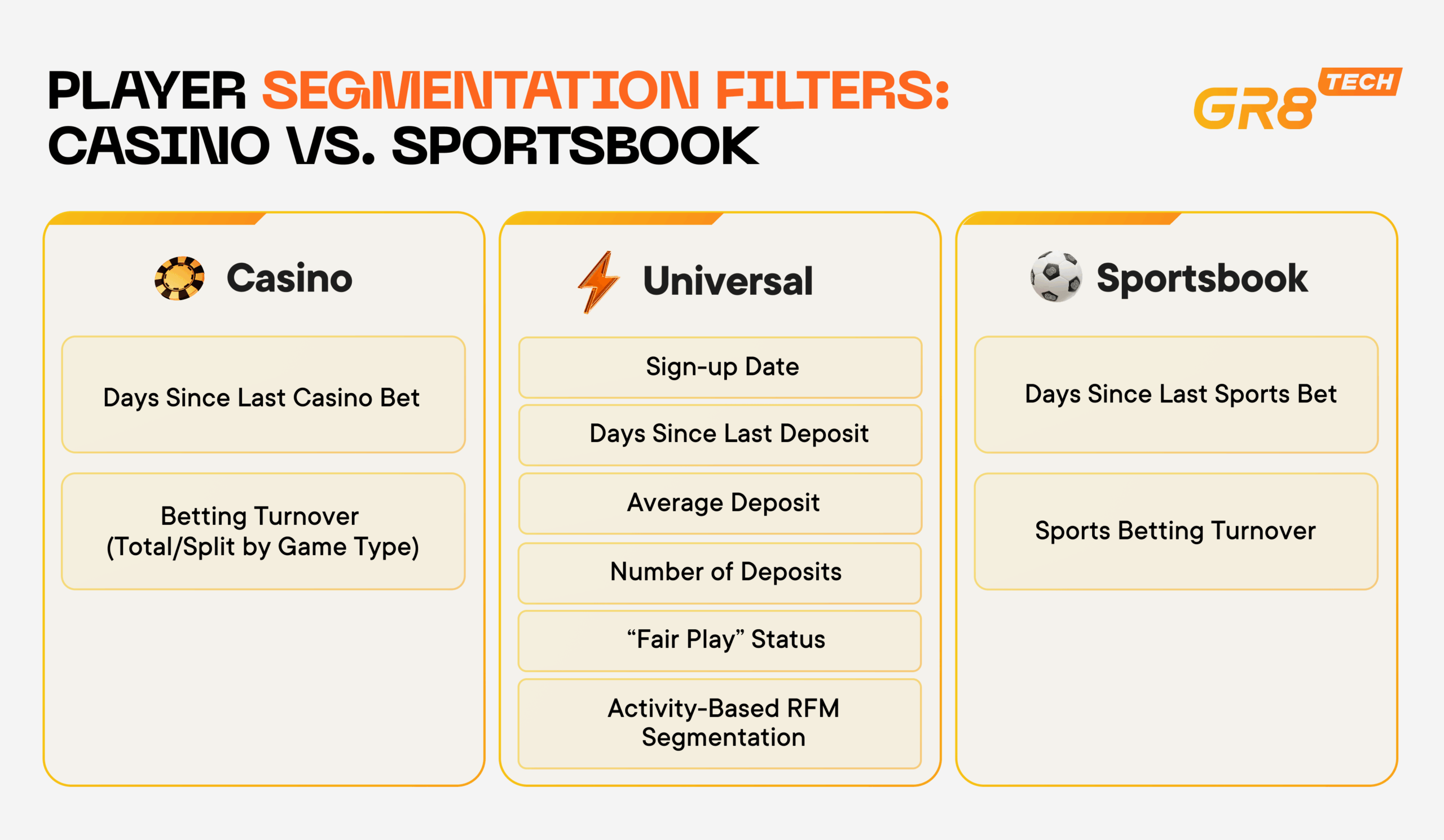
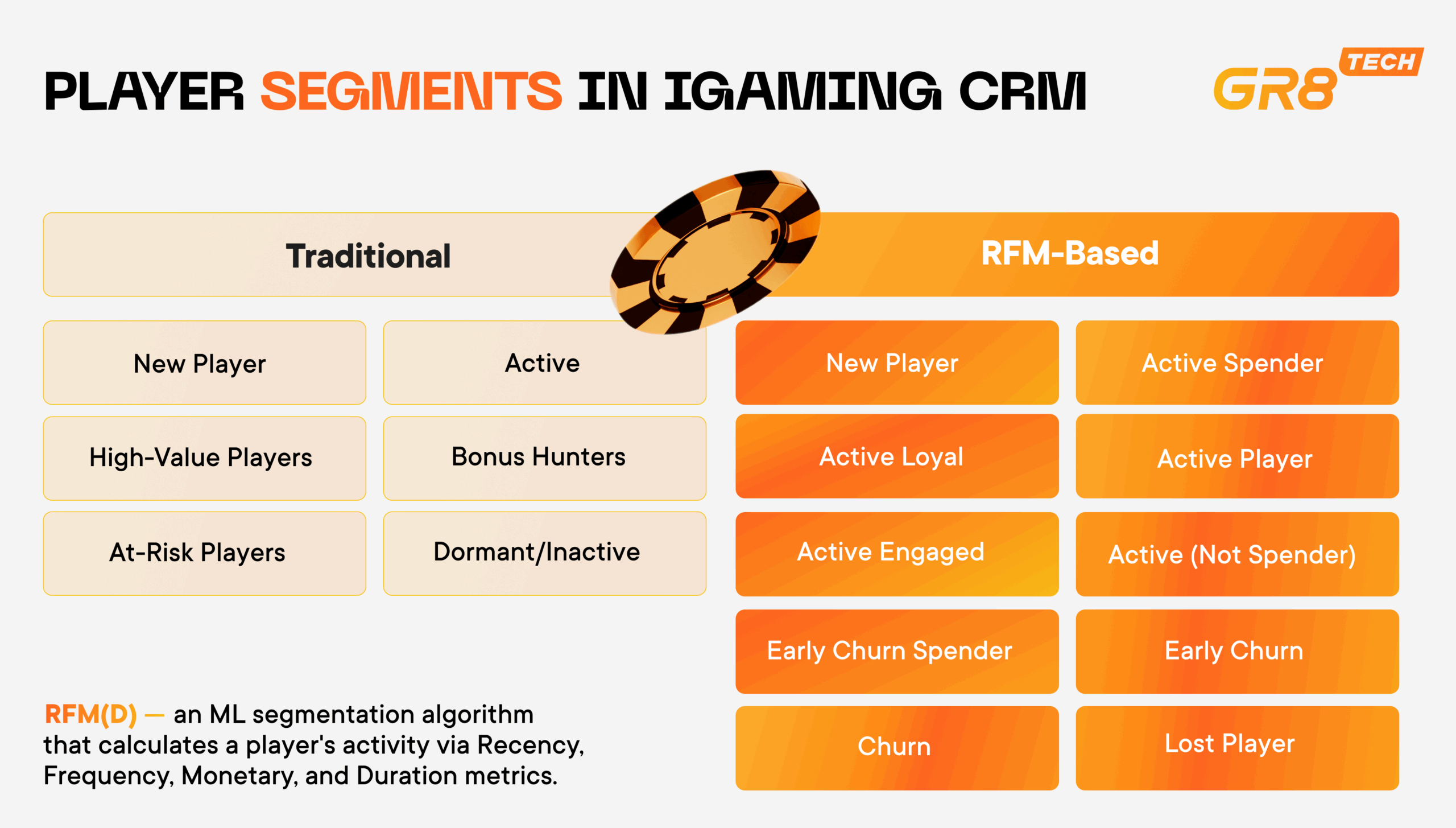
The algorithms also improve segmentation. While the traditional approach looks at historical data, AI/ML segmentation blends history with predictions. It relies on RFM(D) (Recency, Frequency, Monetary, and Duration) metrics and breaks players into 10 micro-clusters, reflecting their real activity and laying the groundwork for more granular targeting.
Here’s how it works. Let’s say a user is a football fan who hasn’t bet for 2 days. In this case, AI will spot the preference, segment them as “Active (Not Spender),” and send a reminder about the upcoming Chelsea–Liverpool match. And one more example: if a casino player regularly spins the reels, the system will label them as “Active Loyal” and include them in the newsletter about upcoming slot releases.
In both cases, communication will feel natural, not forced. That relevance lets operators capture users’ attention and maintain the betting flow.
RFM analysis proved its value with our client operating in Central Asia. They didn’t have a big development team, so we suggested RFM segmentation. Within months, their GGR doubled. Not because their messages became louder or more frequent, but because the CRM finally spoke to the right players at the right moment.
Timely Retention and Reactivation
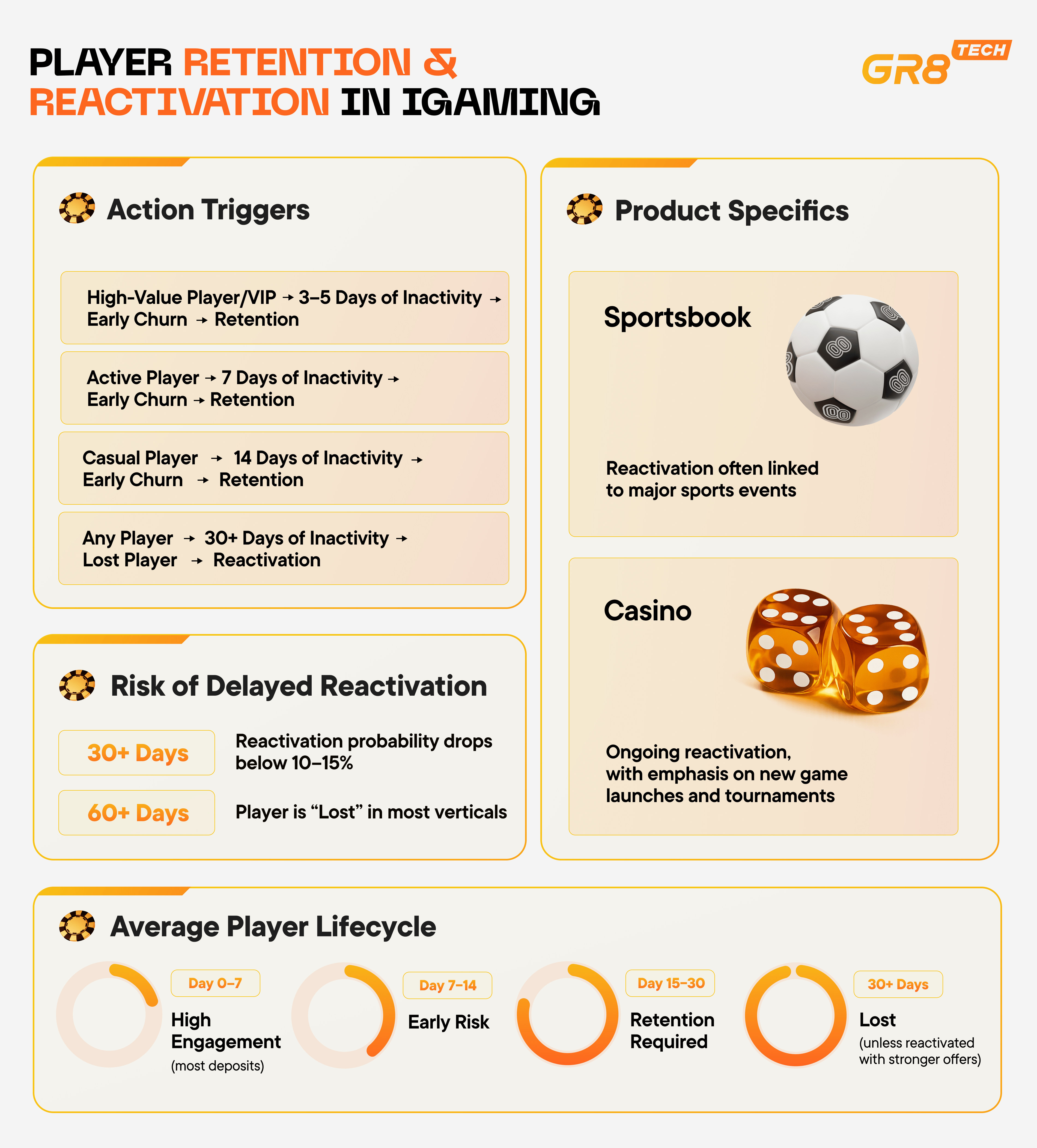
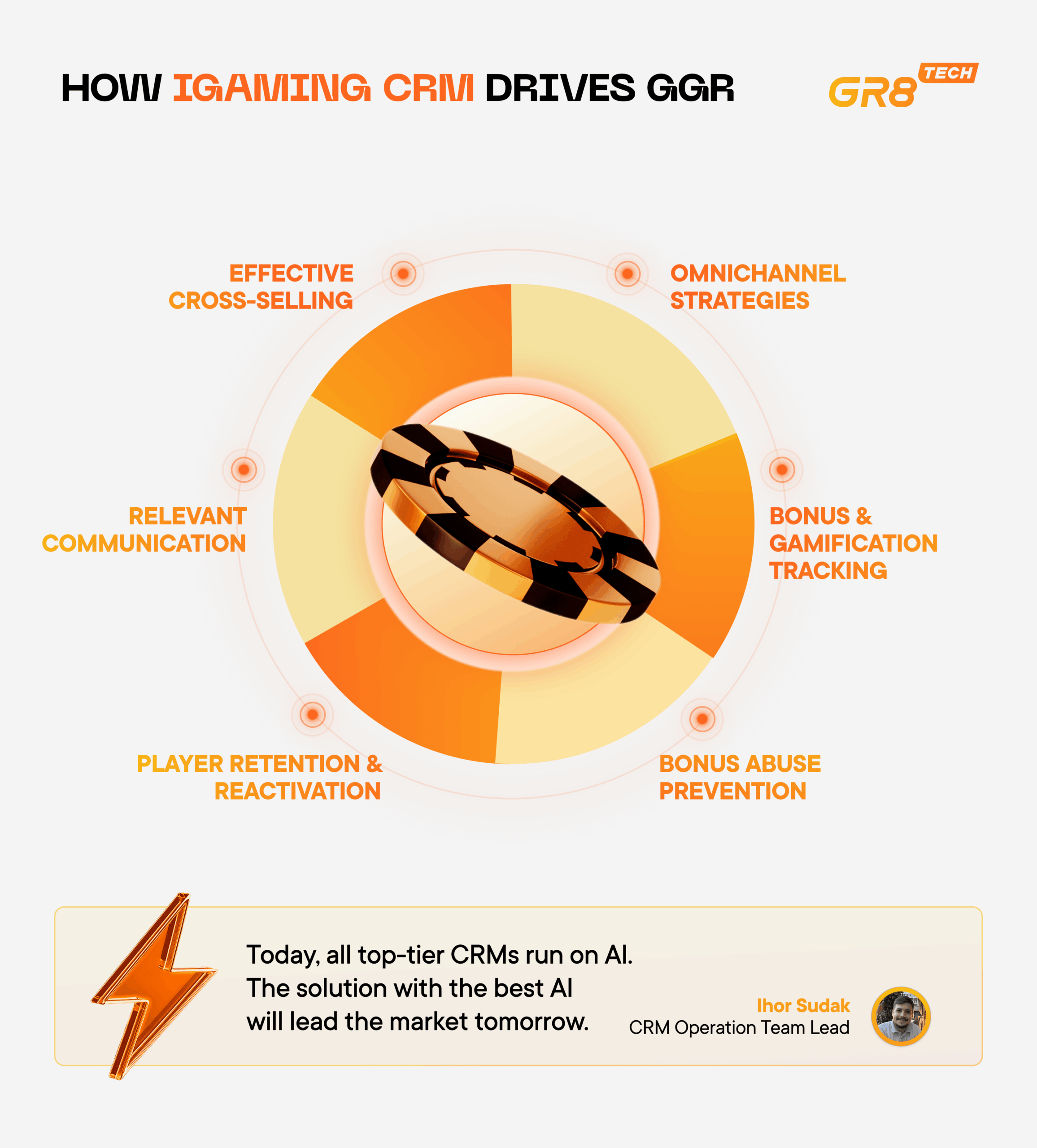
Retention always beats acquisition when it comes to player cost. A profitable iGaming product retains around 30% of its user base while reactivating or attracting 70% monthly. CRM keeps this balance stable by flagging players who require immediate action—a bonus, notification, or personalized reward.
From our experience, 7 days without a bet is already a warning sign for a regular bettor. For a casual one, the threshold is 14 days. Once inactivity exceeds 30 days, we mark them “Lost.” Built-in AI helps us catch those signals early. It predicts churn before it happens and launches retention mechanics.
Even in real time, where every millisecond matters, the AI CRM system reacts instantly. If a bettor loses more than three times in a row, the system triggers an automated bonus to keep them in the game.
Player reactivation also relies on tailored notifications and bonuses. However, an operator should offer bonuses only when truly needed, not when players plan to return on their own. That’s where AI makes the difference: it analyzes behavior patterns and prevents bonus waste by filtering out those likely to re-engage.
Besides, reactivating just 2–3% of the existing user base is far cheaper than attracting new signups. Sending an SMS or push notification costs almost nothing compared to traditional acquisition activities. Even without deep CRM automation, timely reactivation brings massive payoff.
No Fraud, No Loss
According to Sumsub, 41.9% of iGaming fraud happens at the deposit stage. That’s why online CRM systems come with AI protection tools. They monitor real-time behavior patterns, detect anomalies, trigger alerts, and stop bonus abuse before it drains margins.
| Anomalies Related to Bonus Abuse | Detection Method | Action | Benefit for Operators |
| Multiple accounts claim the same bonus | IP/device match alerts | Block bonus claim | Reduced bonus spend |
| Player uses a large bonus without deposits | Bonus-to-deposit ratio alert | Adjust eligibility rules | Protected margins |
| Cashout after bonus is too rapid | Gameplay pattern monitoring | Exclude player from future promos | Enhanced campaign ROI |
| Claim patterns repeat on partner brands | Cross-brand data integration and analysis | Flag account for review | Prevented multi-platform abuse |
But fraud prevention is not limited to real-time. The RAF team reviews every upcoming bonus campaign, assessing its effectiveness and susceptibility to bonus hunting before it goes live. This way, operators can estimate their profits and avoid extra risks.
Turning Bonuses into Revenue Drivers
Maksym Salnyk, my teammate and CRM Head, is convinced that while CRM can keep LTV and GGR high through segmentation and well-timed communication, bonus campaigns multiply them.
I totally agree. When I think about iGaming player LTV, three factors come to mind: the quality of the UX, customer support, and the relevance of rewards. CRM systems focus on the latter, enabling measurable bonus campaigns and gamification.
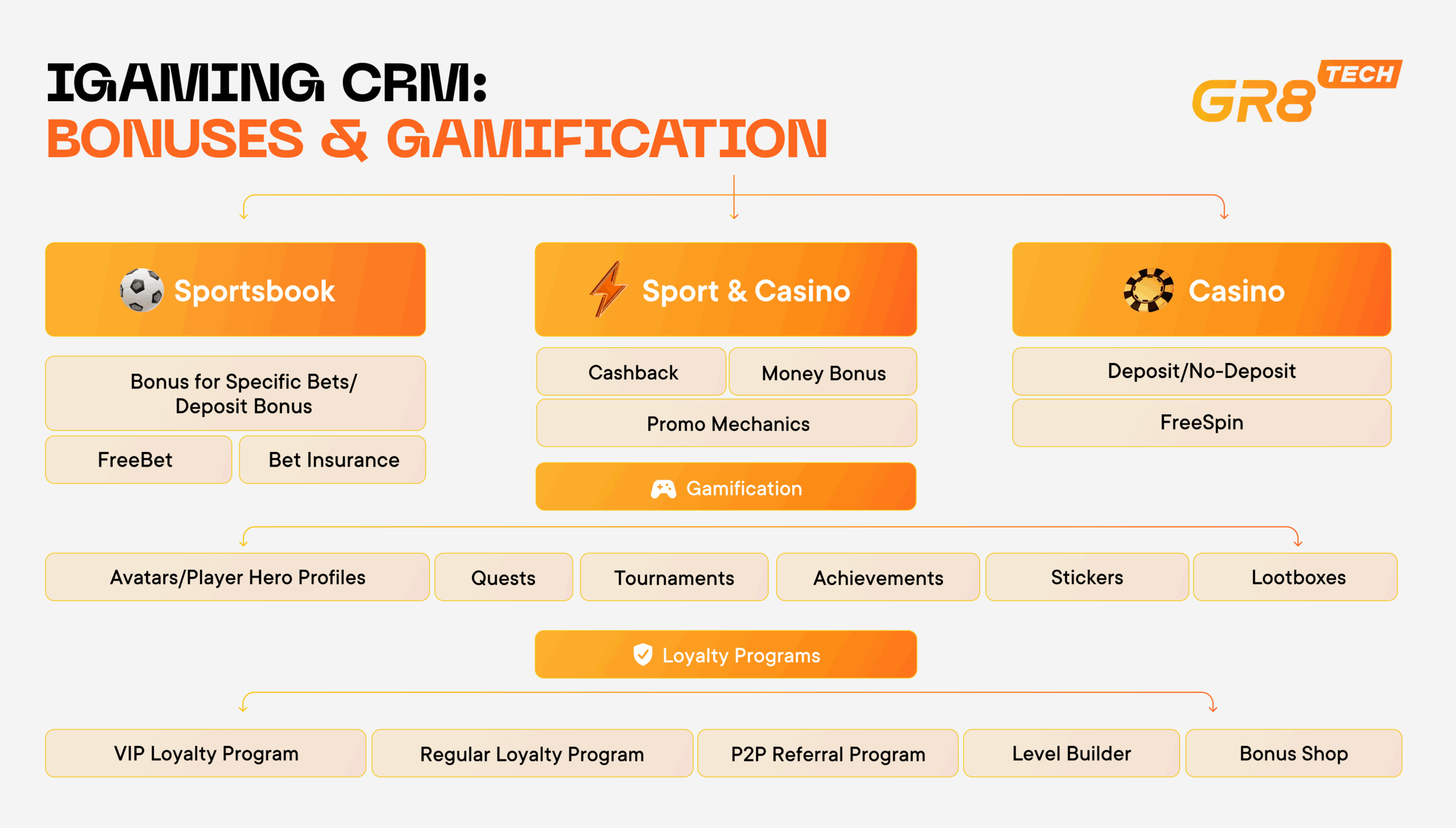
A robust CRM lets operators roll out challenges, leaderboards, quests, and rewards, and plan the activities precisely. While sportsbooks and casinos have similar CRM functionality, the approach to bonus strategies differs across the products:
- Sports betting thrives on real-time events. Operators need to tie campaigns to the sports calendar, prepare them in advance, and send targeted reminders;
- Casino, on the other hand, runs on diversity and consistency. Here, success depends on finding the perfect trigger for each player, whether it’s a Friday night bonus drop, a free weekday spin session, or something else. Today, we detect timing through historical analysis. But I think there is a chance that AI will take over this task in the not-too-distant future.
Lifecycle planning matters just as much within both products. On average, a player moves from sign-up to churn in about 30 days. In the early stage, it makes sense to push harder with bonuses, even with a short-term loss, because the payoff comes later. The strategy also works for VIP users before major sports events.
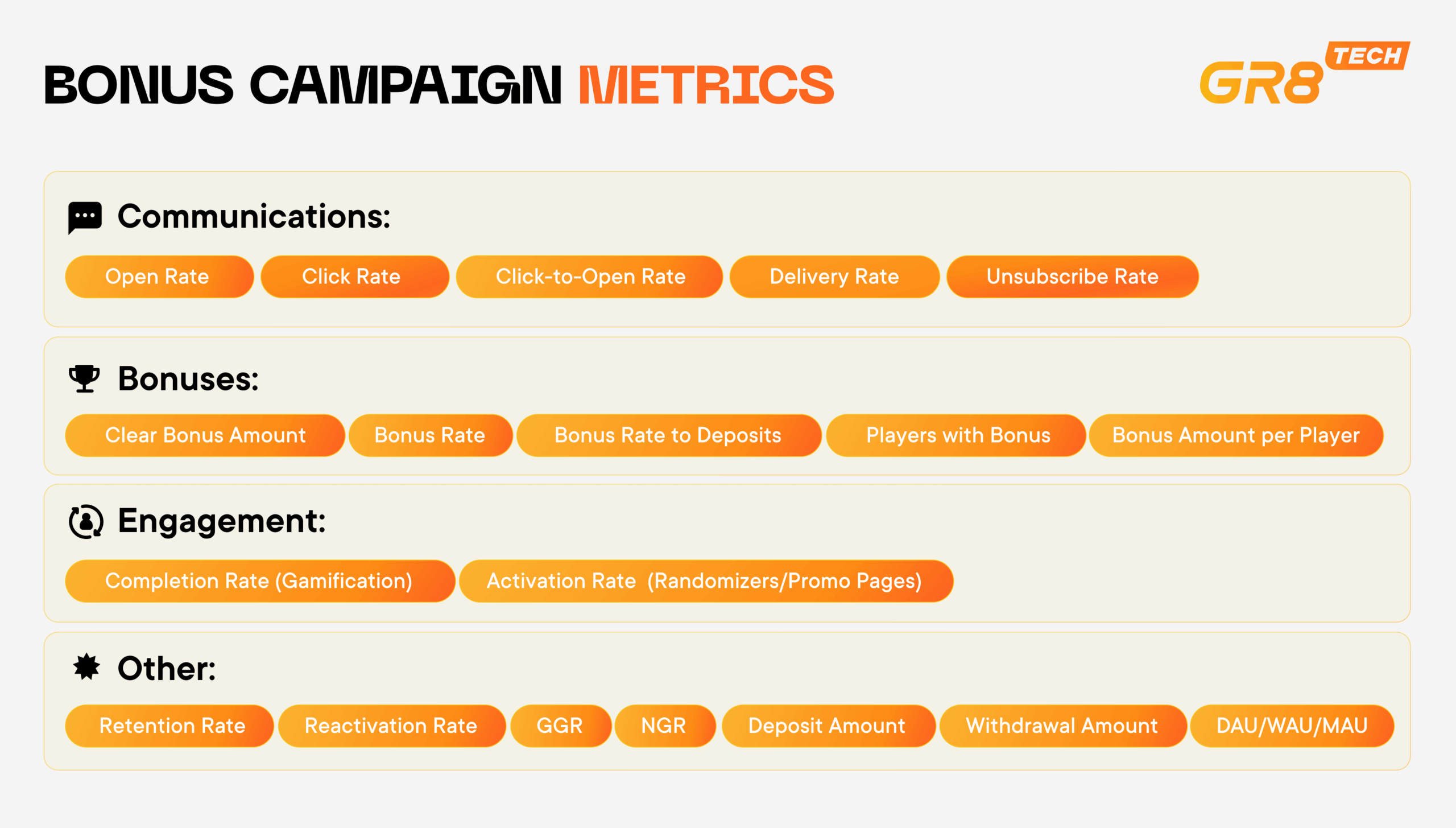
However, the bonuses must decrease gradually so players don’t get used to free deposits. That’s when CRM saves the day. Metrics like bonus rate (keep it around 20%), retention rate, and first- and second-time deposit (FTD/STD) give operators clarity. They show what’s working, where margins are slipping, and how campaigns affect GGR.
Omnichannel Strategies Paired with Compliance
I’m convinced that the more channels operators use, the better. SMS, email, web notifications, push-ups, Telegram, and WhatsApp communications—the best iGaming CRM ties them all together in one omnichannel strategy, keeping activity steady and GGR high.
I can actually see how it impacts engagement, because players don’t just spot the brand once; they come across it naturally via several channels. And here’s the best part: it’s all fully compliant. Users willingly share data like name, birth date, and location, so operators can personalize communications without crossing any regulatory lines.
GenAI takes omnichannel strategies further by speeding up content creation for campaigns and notifications. Of course, CRM teams still need to refine prompts and monitor results, but the workflow becomes faster and smoother.
Secret Weapon Against Seasonal Drop
Running a sportsbook and a casino? CRM can stabilize revenue streams through cross-selling strategies.
From our experience, it’s easier to cross-sell sportsbook users into the casino than vice versa. Casino content fills the event gaps or seasonal downturns with free spins, Aviator rounds, or live dealer games. A good CRM makes this transition effortless. It allows operators to segment sportsbook players, detect engagement mechanics, and mirror them across the products.
Cross-selling casino players into the sportsbook is much harder, but not impossible. Big local tournaments or global events create those rare moments when casual casino players place a sports bet. Even if it’s one-time, it still boosts GGR.
Last but Not Least
CRM for online sportsbook and casino is a revenue engine, but let’s be clear: it only does half the job. The rest always relies on the operator. You can’t just launch a couple of communication chains, run some bonus campaigns, or make 1–2 reactivation attempts, and expect lasting results. Success comes from ongoing metrics analysis and CRM strategies testing.
On the bright side, with the right provider, the learning curve shortens. If they offer detailed tutorials, a comprehensive knowledge base, and 24/7 support, CRM becomes a tool for long-term growth, not a one-time experiment.
CONNECT. ENGAGE. CONVERT.
With CRM that fuels AI segmentation, immersive journeys, omnichannel reach, and margin protection.
EXPLORE CRM BY GR8 TECH